

Clinical Weight Management in 2026: How PureVital GLP Options Support Sustainable Results
A practical guide to Semaglutide, Tirzepatide, Retatrutide, Orforglipron, and supportive clinic presentations — with strengths, forms, and when clinics choose each option.
12 min read · Updated 2026-04-05 · PureVital Learn

Why medical weight management matters now
Excess weight drives cardiometabolic risk, joint stress, sleep apnea, and reduced quality of life. Lifestyle change remains foundational — yet many patients plateau without pharmacologic support that addresses appetite biology. Incretin-based therapies have shifted expectations: meaningful, clinic-supervised loss is achievable when medicine, counseling, and follow-up work together.
PureVital was built for that clinic workflow. Instead of chasing scattered suppliers, your team can browse aligned strengths across vials, pens, capsules, and drops — with transparent Total API figures where listed — sourced from the PureVital strength & volume update.
Choosing a presentation: vial, pen, capsule, or drops
- Vials — flexible for clinic-measured doses and in-house protocols.
- Pens — patient-friendly hardware for established injectable programs.
- Capsules — oral path for adherence and needle aversion; PureVital oral GLP SKUs include Chromium Picolinate 1 mg.
- Sublingual drops — alternate needle-free format when your protocol prefers liquid oral mucosal absorption pathways.
Match form to the patient’s lifestyle, monitoring plan, and your state’s scope-of-practice rules — not to marketing hype.
Medicine profile
Semaglutide
GLP-1 receptor agonist
Semaglutide remains a cornerstone of clinic weight-management protocols. It mimics glucagon-like peptide-1 activity to support appetite regulation, slower gastric emptying, and improved satiety — helping patients reduce caloric intake with clinician oversight.
How it supports weight goals
GLP-1 signaling helps the brain register fullness sooner and more consistently. Many patients report reduced food noise between meals when therapy is paired with nutrition counseling and activity goals defined by the prescribing clinician.
Why clinics stock it
- Strong evidence base across obesity and metabolic care pathways
- Flexible PureVital presentations: vial, pen, oral capsules, and sublingual drops
- Familiar titration patterns for established programs
- Optional Semaglutide + BPC-157 blend for clinics combining metabolic and recovery goals
Who it may suit
Adults in a supervised medical weight program who need a proven GLP-1 option, including those who prefer injectable, oral, or sublingual formats.
Clinical considerations
Gastrointestinal effects (nausea, reduced appetite, constipation) can appear during dose escalation. Clinics typically titrate carefully, counsel on hydration and meal size, and monitor response. Not appropriate for every patient — contraindication screening and professional judgment are required.
PureVital Semaglutide SKUs
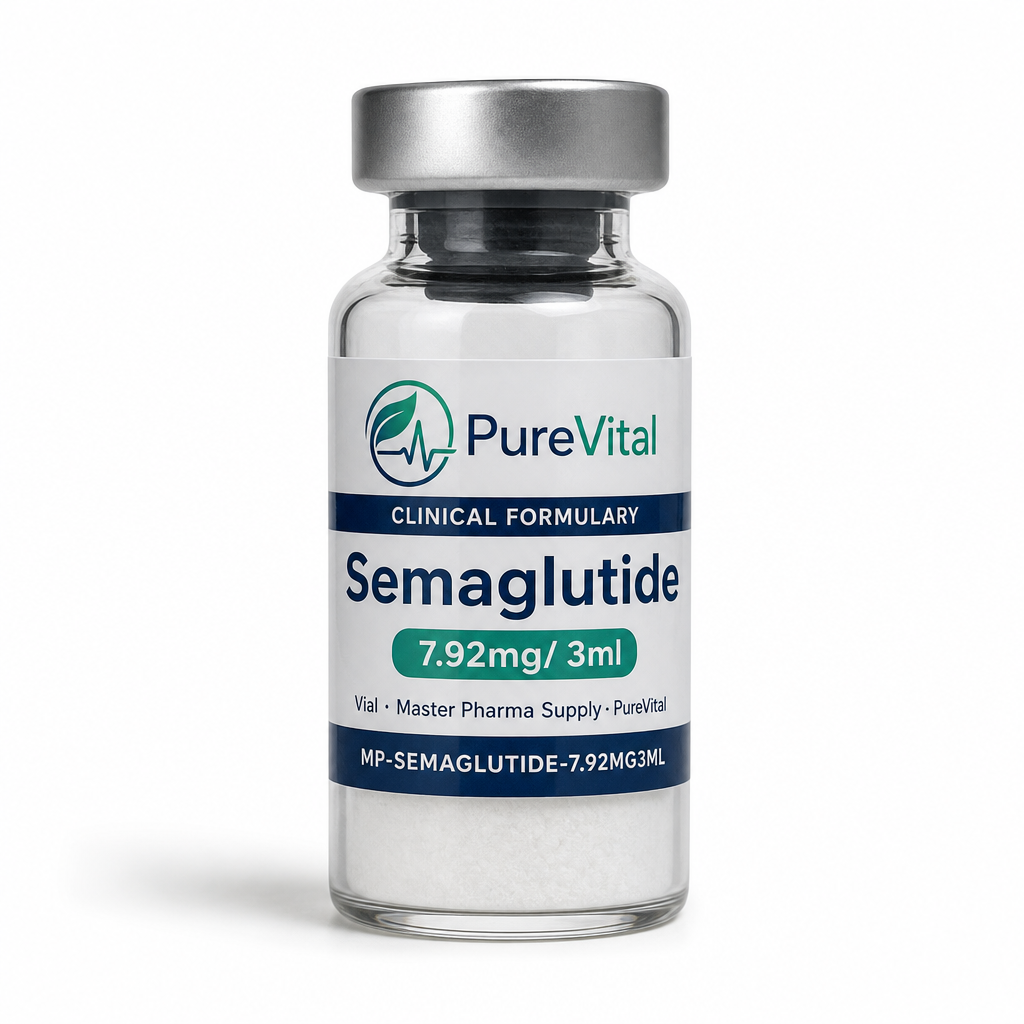
Semaglutide
7.92mg/ 3ml · Vial · API 23.76 mg
Standard clinic vial for measured dispensing
$179.99
View SKU →
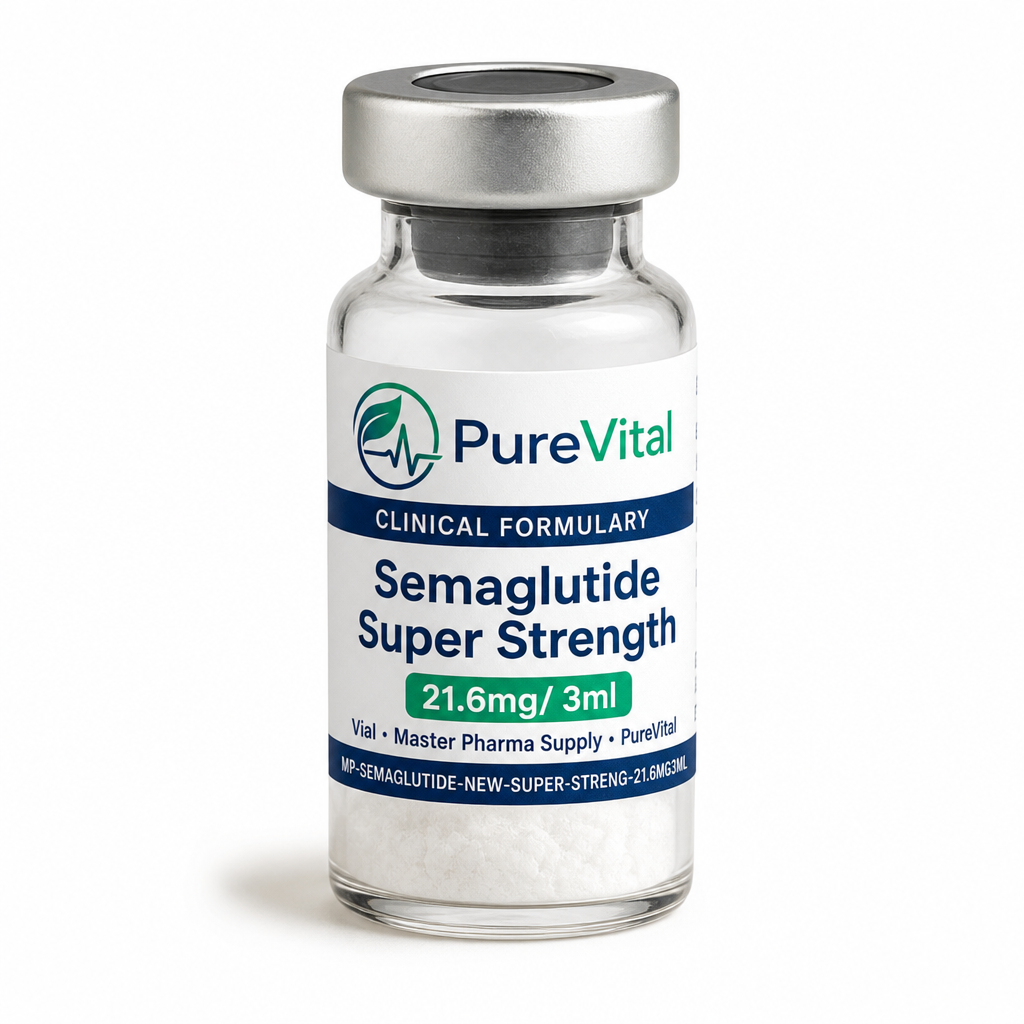
Semaglutide (New Super Strength)
21.6mg/ 3ml · Vial · API 64.8 mg
Higher-strength vial for intensified protocols
$358.99
View SKU →
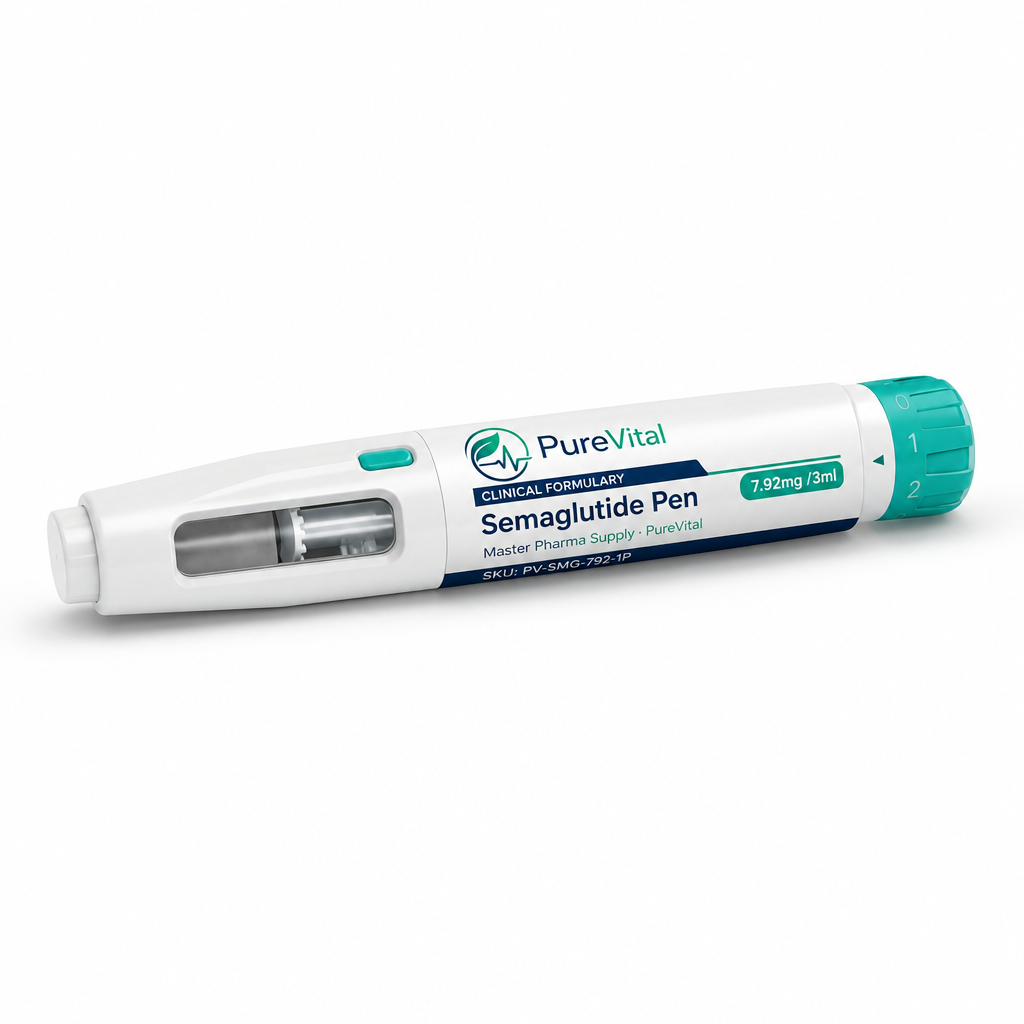
Semaglutide Pen
7.92mg /3ml · Pen · API 23.76 mg
Pen presentation for convenient clinic or home administration pathways
$239.99
View SKU →
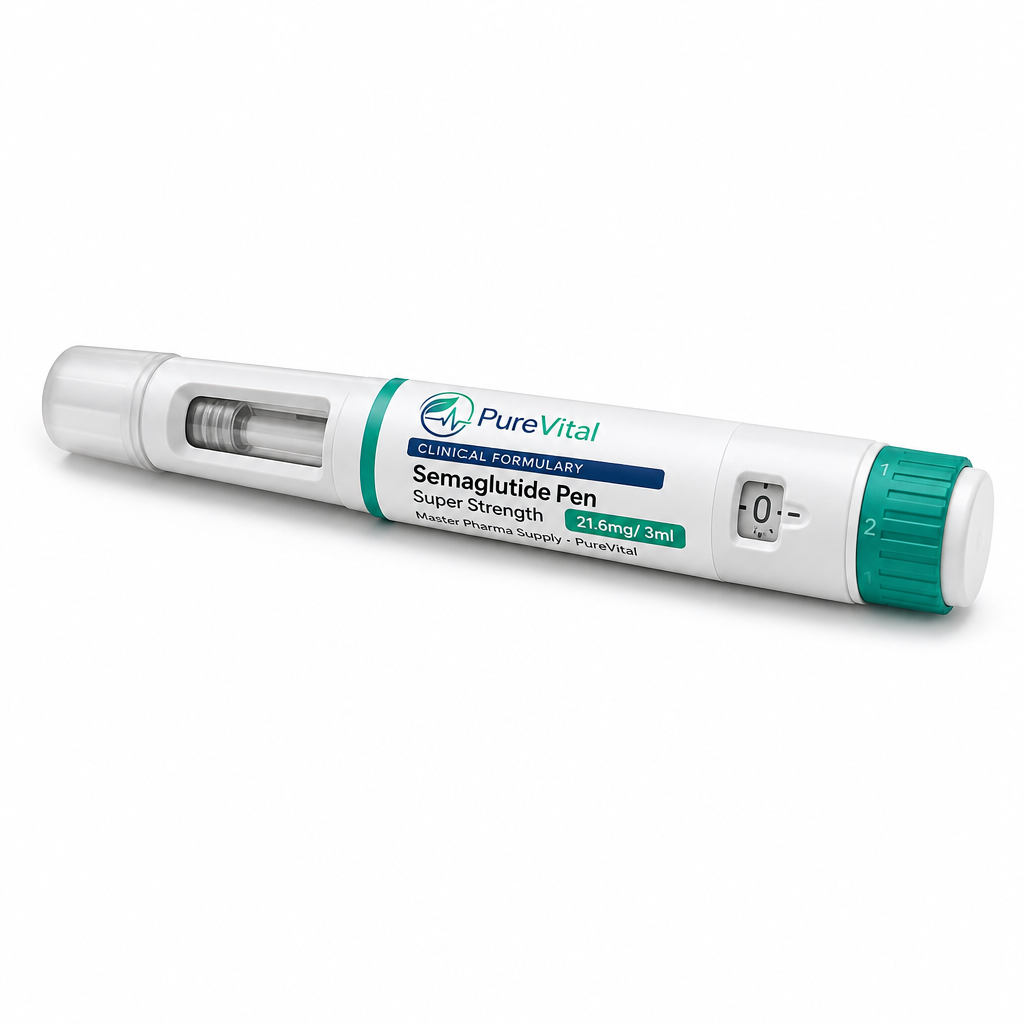
Semaglutide Pen (New Super Strength)
21.6mg/ 3ml · Pen · API 64.8 mg
High-strength pen alignment with super-strength vial
$449.99
View SKU →
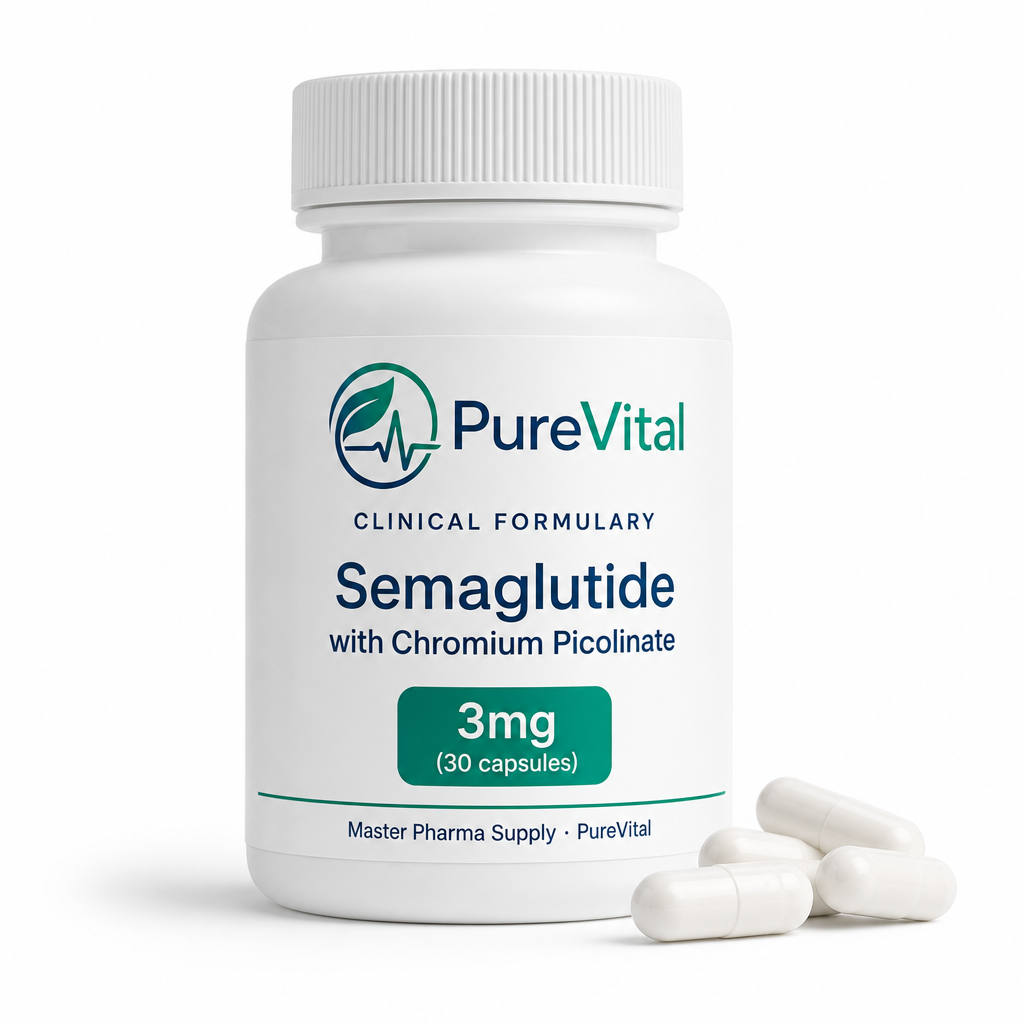
Semaglutide with Chromium Picolinate 1mg
3mg (30 capsules) · Capsules · API 90mg
Oral starter listed strength — 3 mg (30 capsules) with Chromium Picolinate 1 mg
$103.99
View SKU →
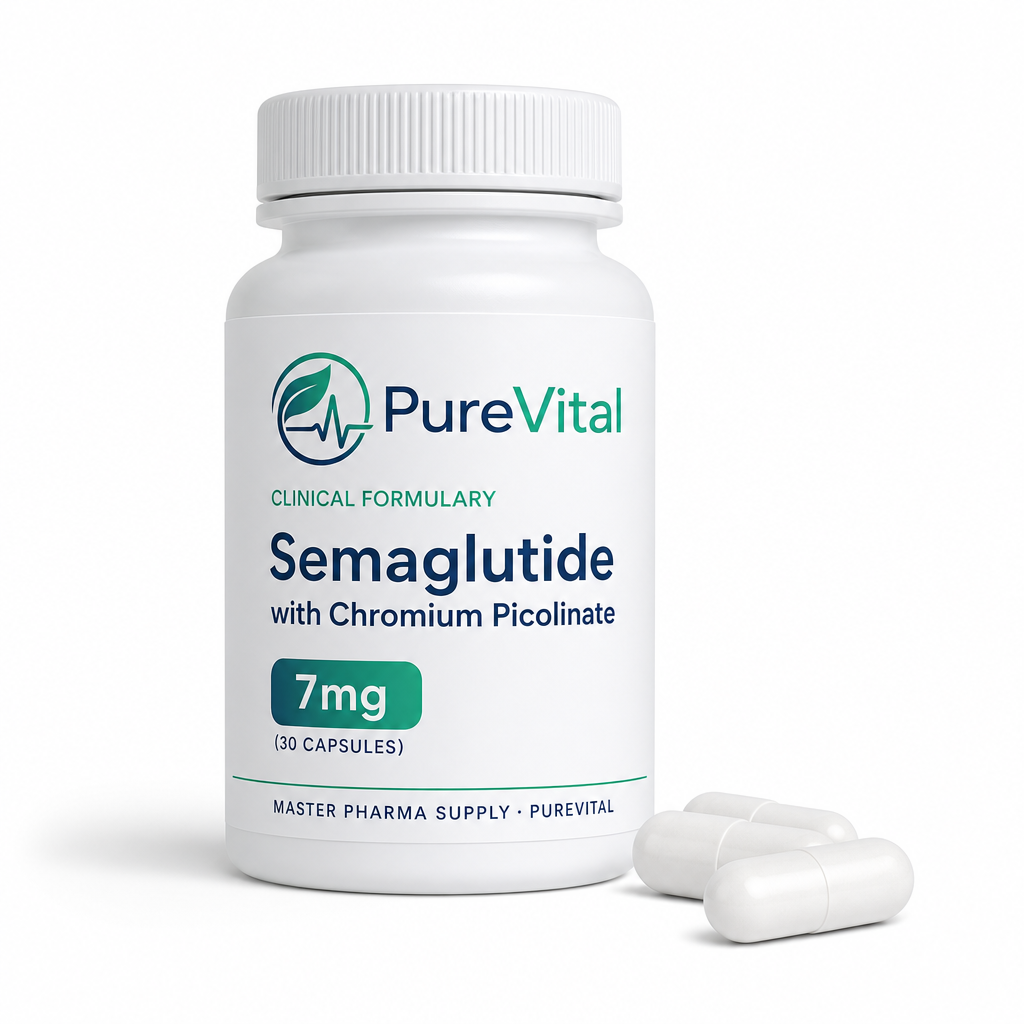
Semaglutide with Chromium Picolinate 1mg
7mg (30 capsules) · Capsules · API 210mg
7 mg (30 capsules)
$110.99
View SKU →
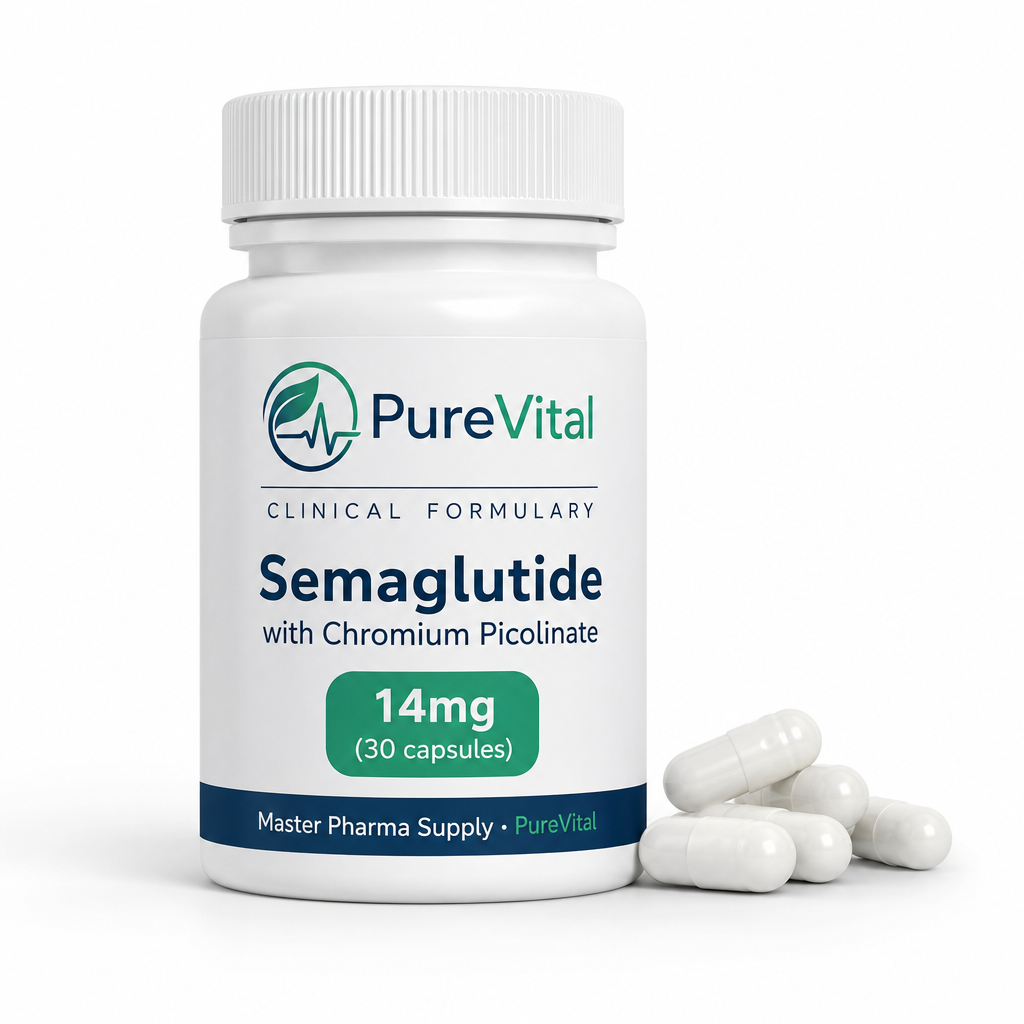
Semaglutide with Chromium Picolinate 1mg
14mg (30 capsules) · Capsules · API 420 mg
14 mg (30 capsules)
$115.99
View SKU →
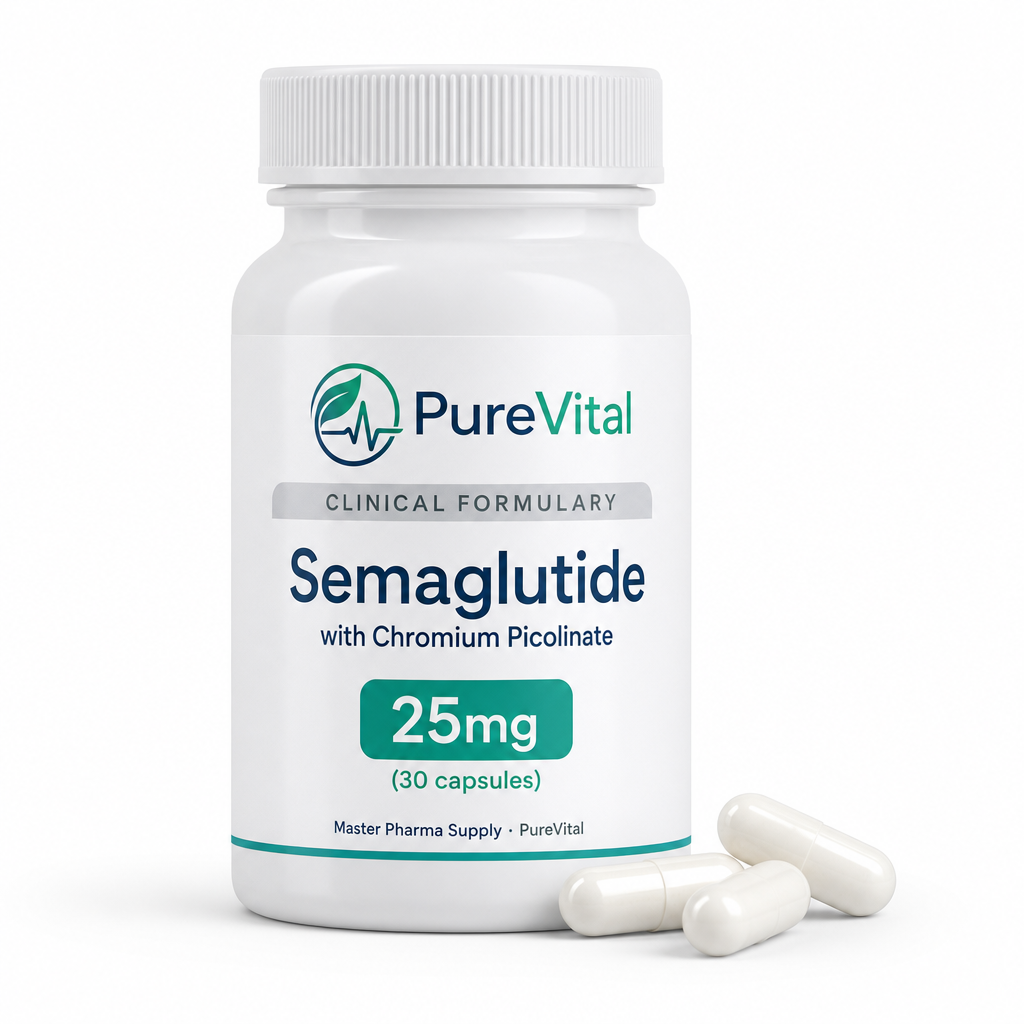
Semaglutide with Chromium Picolinate 1mg
25mg (30 capsules) · Capsules · API 750 mg
25 mg (30 capsules) — highest listed oral Semaglutide pack
$117.99
View SKU →
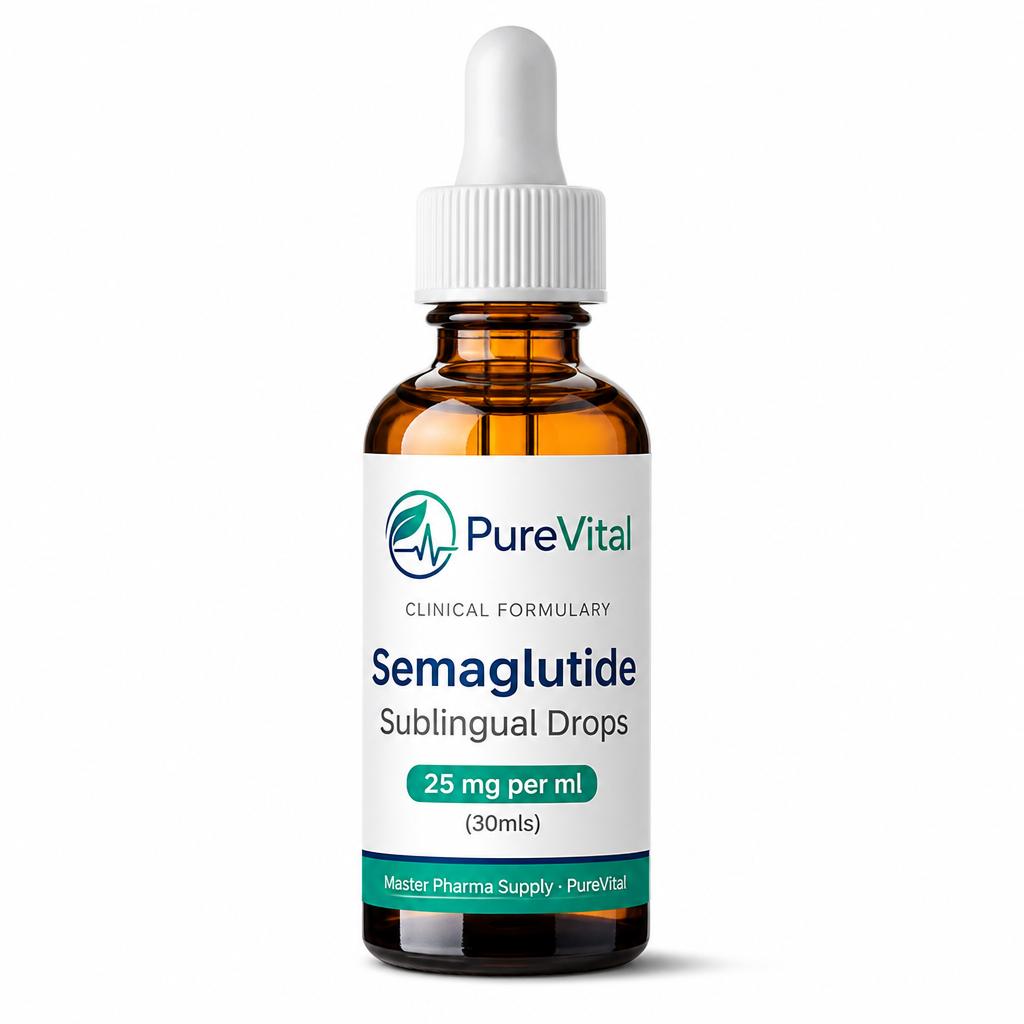
Semaglutide Sublingual Drops
25 mg per ml (30mls) · Drops · API 750 mg
Sublingual drops when needle-free or flexible dosing is preferred
$117.99
View SKU →
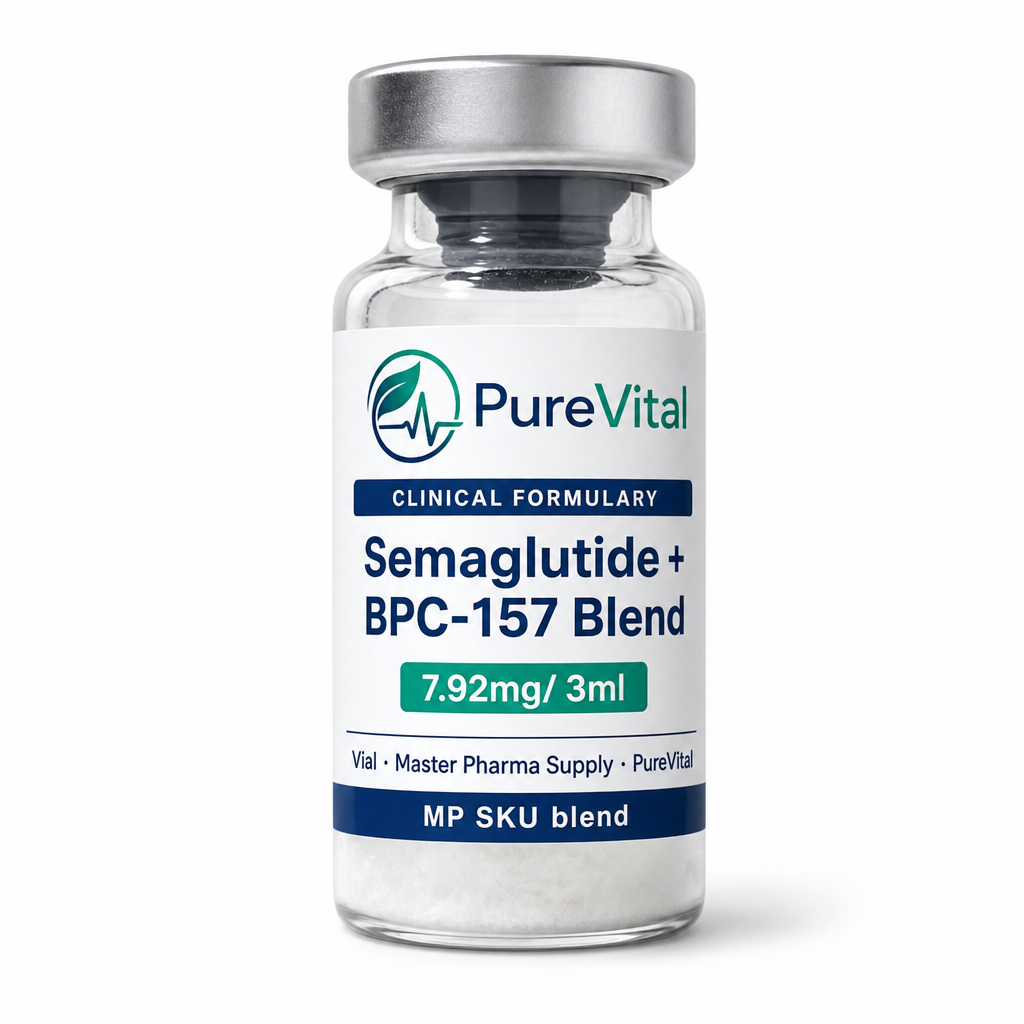
Semaglutide + BPC-157 (1mg/ml) (Blend)
7.92mg/ 3ml · Vial · API 23.76 mg
Blend presentation pairing Semaglutide with BPC-157
$157.99
View SKU →
Medicine profile
Tirzepatide
Dual GIP / GLP-1 receptor agonist
Tirzepatide engages both GIP and GLP-1 pathways. In clinical practice it is often selected when a dual-agonist profile is desired for body-weight and metabolic endpoints under specialist supervision.
How it supports weight goals
By combining GIP and GLP-1 activity, Tirzepatide influences appetite, insulin dynamics, and energy balance more broadly than single-pathway agents. Clinics pair therapy with lifestyle foundations and follow-up labs as clinically indicated.
Why clinics stock it
- Dual-incretin mechanism with strong weight-reduction potential in appropriate candidates
- Available in PureVital vial, pen, and sublingual drop presentations
- Useful step for patients who need an alternative pathway to GLP-1 monotherapy
Who it may suit
Patients in structured programs who may benefit from dual-agonist therapy after clinician assessment of history, comorbidities, and treatment goals.
Clinical considerations
Dose escalation, GI tolerability, and access logistics should be planned up front. As with all incretin therapies, individualized screening and ongoing monitoring are essential.
PureVital Tirzepatide SKUs
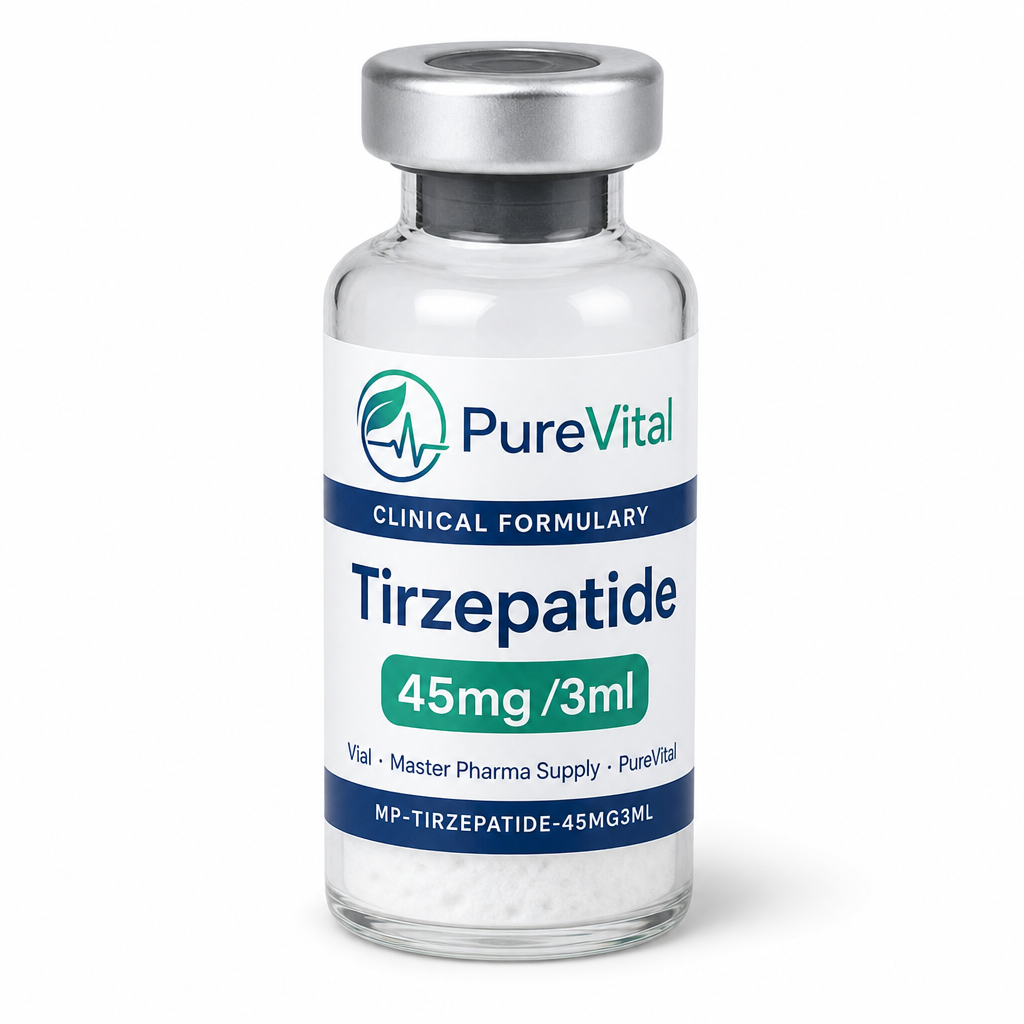
Tirzepatide
45mg /3ml · Vial · API 135 mg
High-API vial (Total API 135 mg) for clinic compounding / dispensing pathways
$299.99
View SKU →
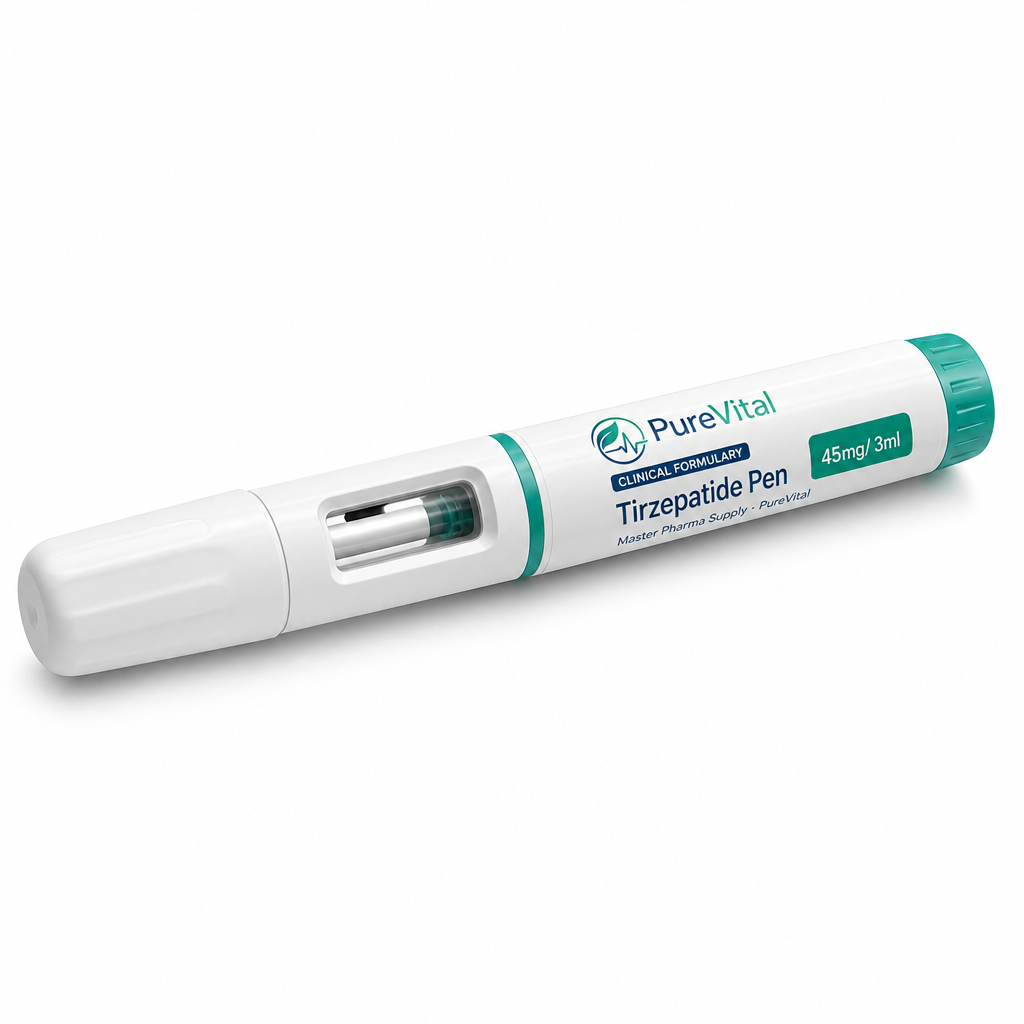
Tirzepatide Pen
45mg/ 3ml · Pen · API 135 mg
Matching pen presentation for protocol continuity
$383.99
View SKU →
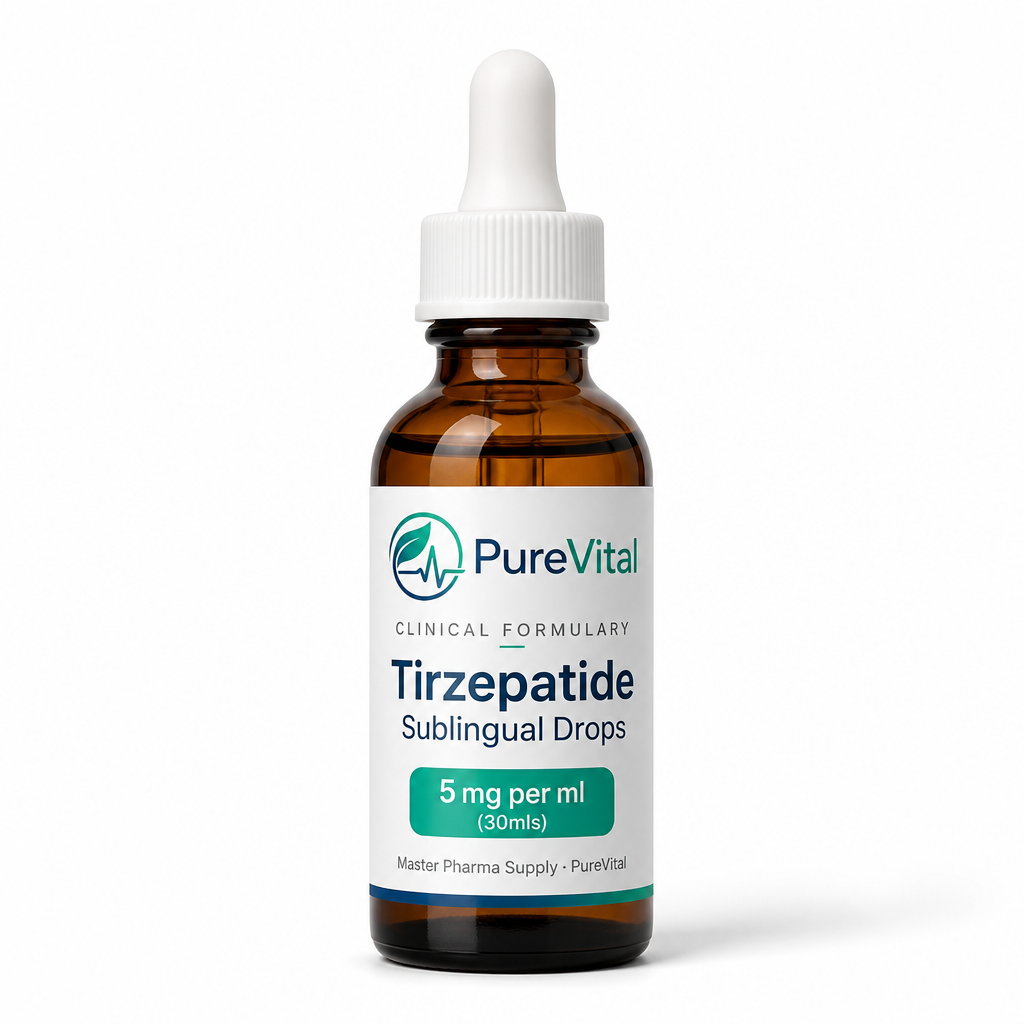
Tirzepatide Sublingual Drops
5 mg per ml (30mls) · Drops · API 150 mg
Sublingual option at 5 mg per ml (30 ml)
$143.99
View SKU →
Medicine profile
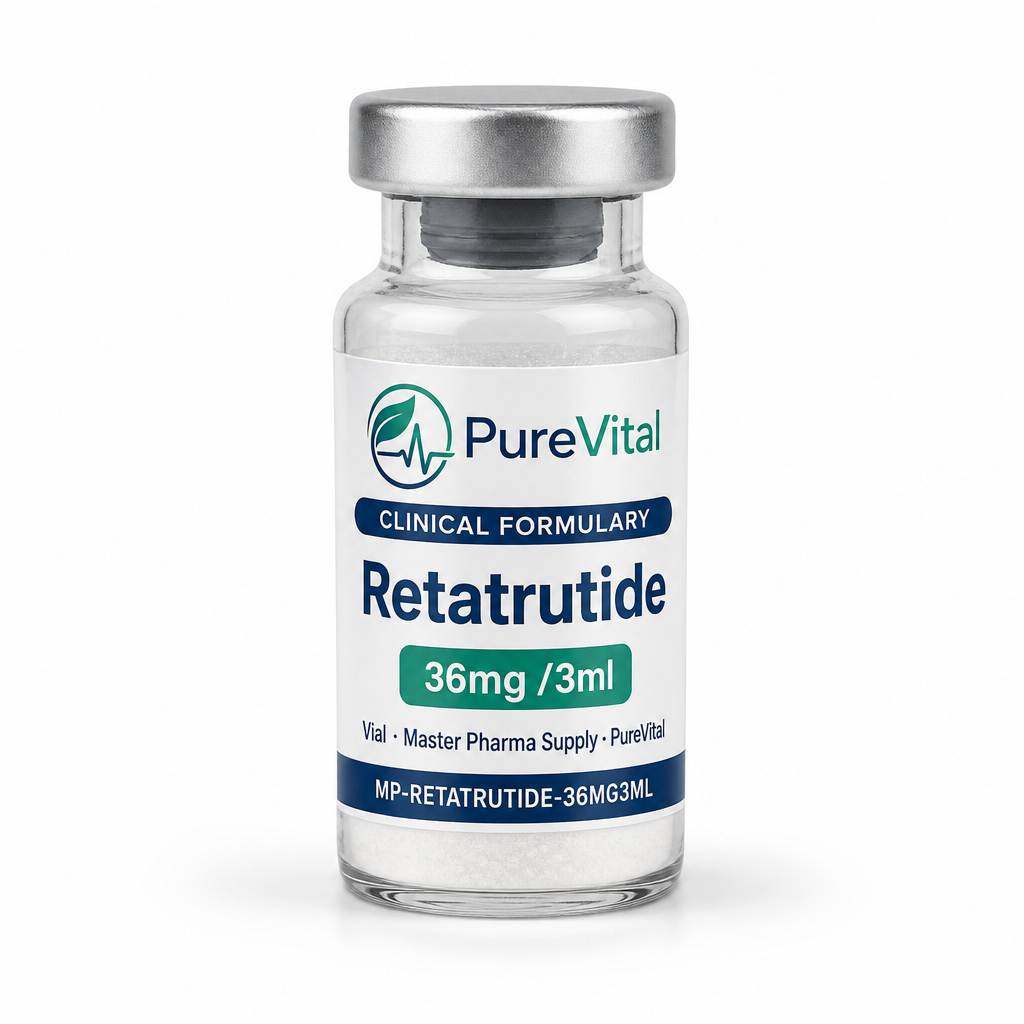
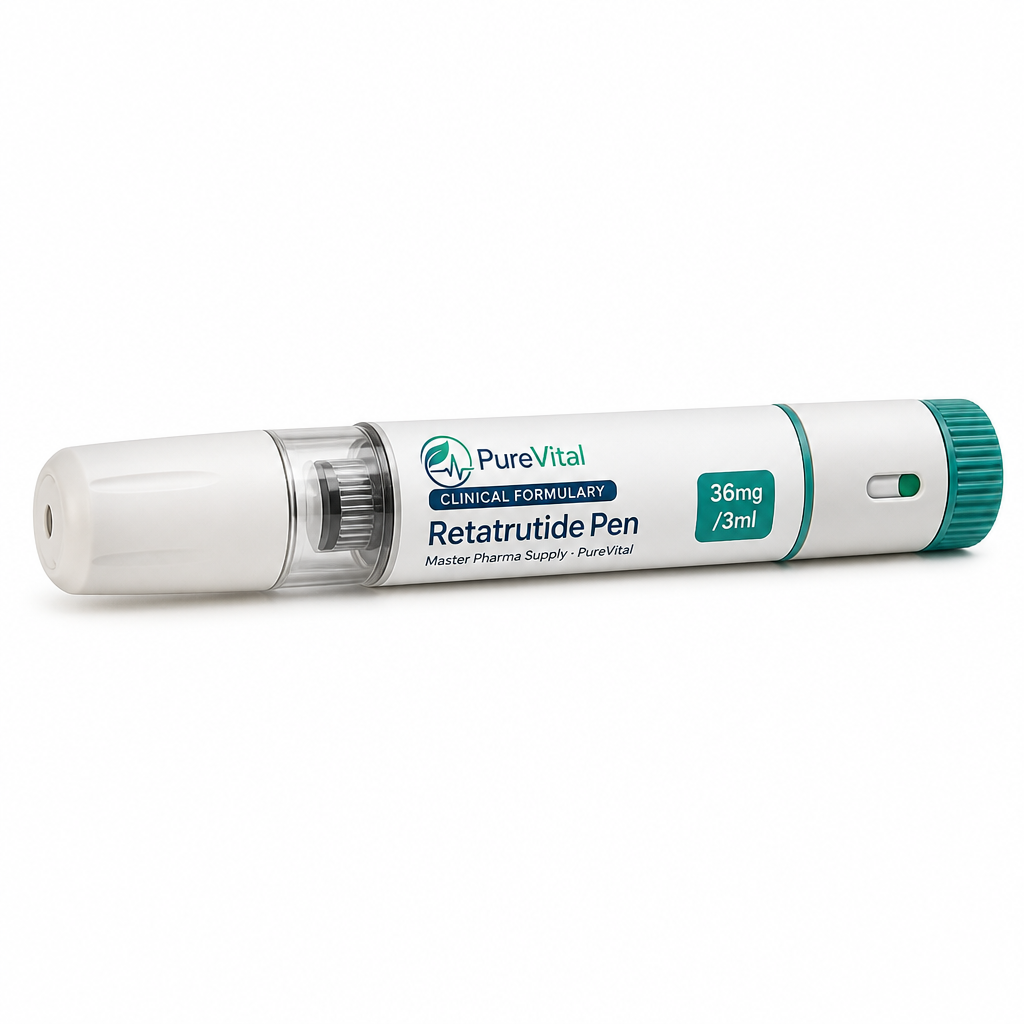
Retatrutide
Investigational triple agonist class (GLP-1 / GIP / glucagon pathway interest)
Retatrutide represents the next wave of multi-agonist interest in medical weight management. PureVital offers clinic-facing vial and pen presentations so practices can evaluate and operationalize stock within their licensed scope and local regulations.
How it supports weight goals
Research interest focuses on simultaneous influence across satiety, energy expenditure, and metabolic signaling. Real-world clinic use must follow applicable regulations, informed consent, and medical oversight.
Why clinics stock it
- Triple-pathway scientific interest for advanced metabolic programs
- High-attention molecule for patients needing progressive options after clinician review
- Vial and pen alignment for inventory simplicity
Who it may suit
Select patients inside advanced obesity or metabolic practices when the supervising clinician determines Retatrutide is appropriate and compliant.
Clinical considerations
Treat as a specialized option. Confirm regulatory standing for your jurisdiction, document counseling, and maintain conservative titration / monitoring standards.
Medicine profile
Orforglipron
Oral non-peptide GLP-1 receptor agonist (emerging oral pathway)
Orforglipron expands oral GLP options for clinics building needle-free weight programs. PureVital lists multiple capsule strengths with Chromium Picolinate 1 mg — useful when oral adherence is a priority.
How it supports weight goals
As an oral GLP-1 receptor agonist candidate in clinical adoption conversations, Orforglipron is positioned for appetite and weight endpoints with the convenience of capsules. Clinics should follow evolving prescribing standards and manufacturer / clinical guidance where applicable.
Why clinics stock it
- Oral daily pathway without reconstitution / injection logistics
- Tiered strengths (0.8 mg through 17.2 mg per 30-capsule packs) for structured escalation
- Chromium Picolinate included as formulary adjunct on every SKU
Who it may suit
Patients preferring oral therapy, those uneasy with injectables, or programs standardizing on capsule logistics.
Clinical considerations
Emphasize adherence timing, GI counseling, and follow-up. Compare oral vs injectable expectations transparently during consults.
PureVital Orforglipron SKUs
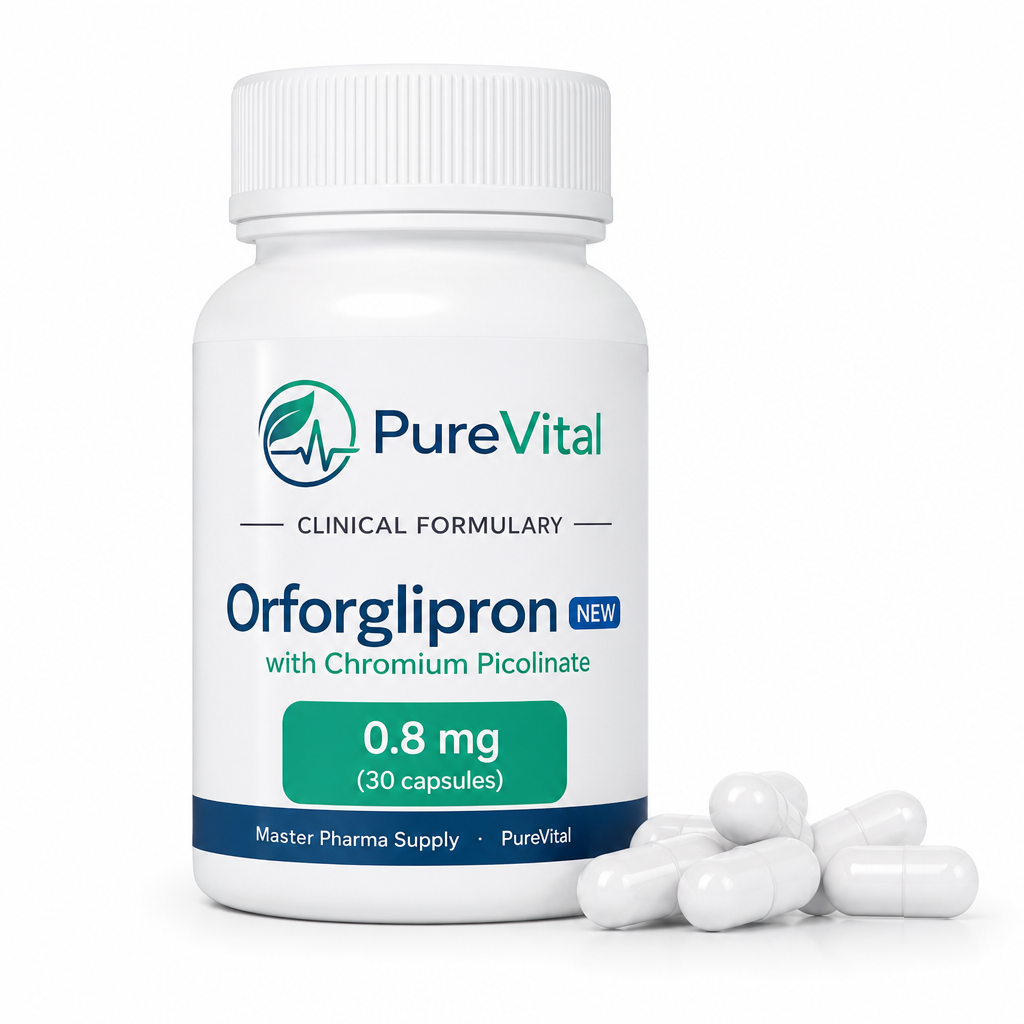
Orforglipron (NEW)with Chromium Picolinate 1mg
0.8 mg (30 capsules) · Capsules · API 2.4 mg
Entry strength — 0.8 mg (30 capsules)
$143.99
View SKU →
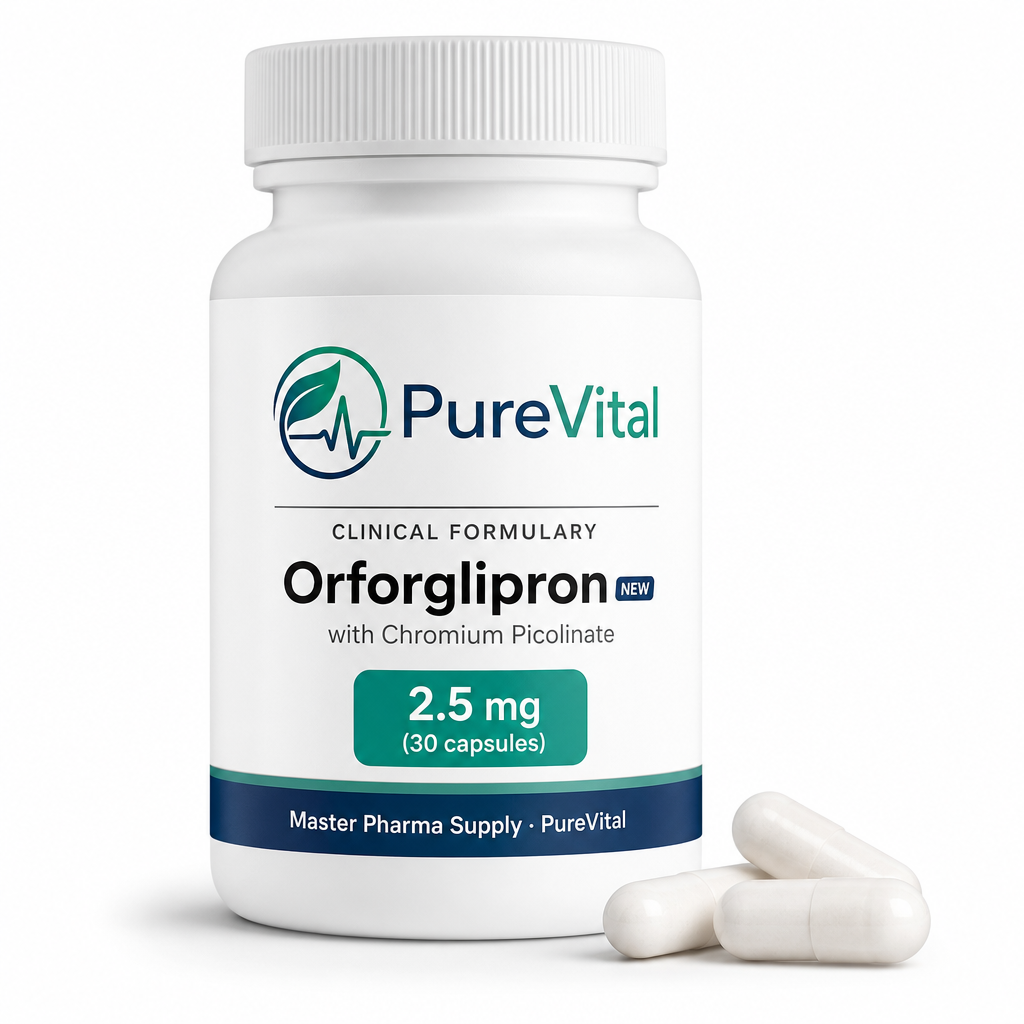
Orforglipron (NEW)with Chromium Picolinate 1mg
2.5 mg (30 capsules) · Capsules · API 75 mg
2.5 mg (30 capsules)
$155.99
View SKU →
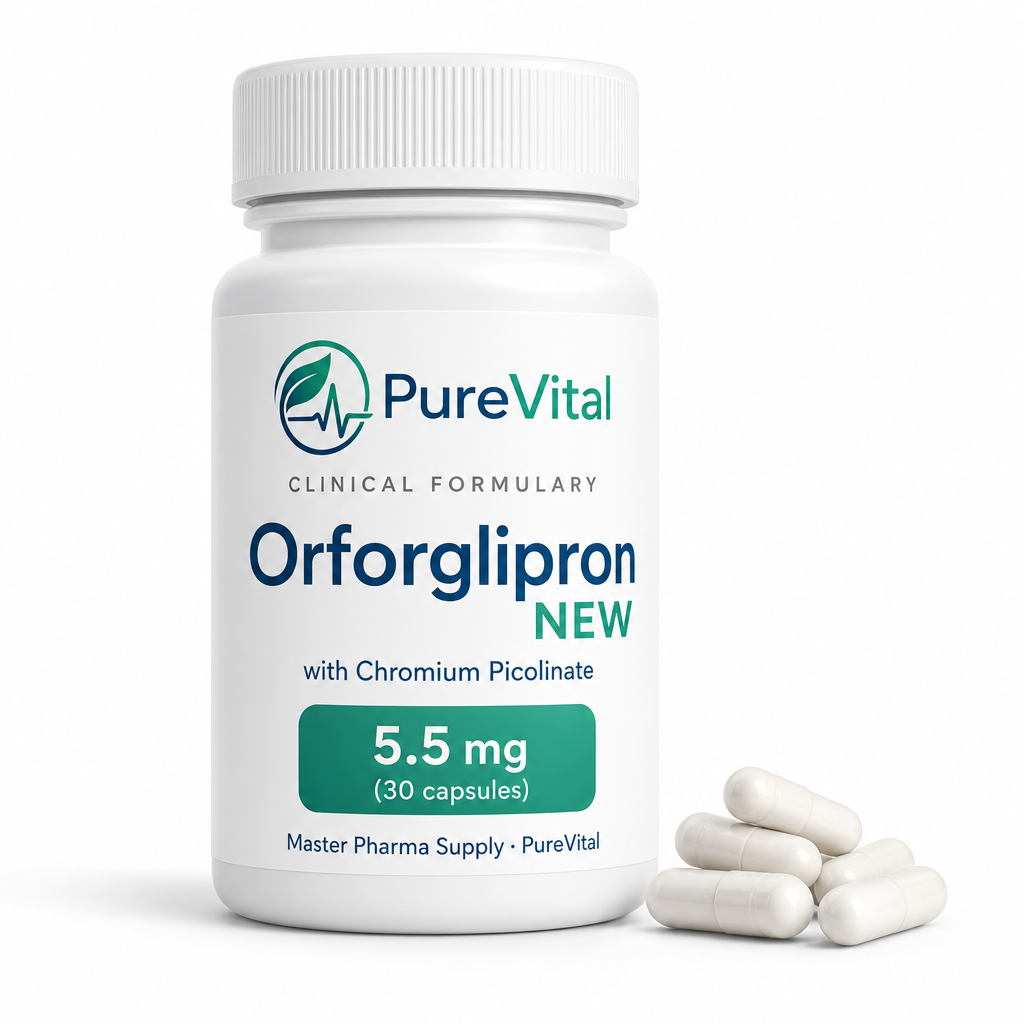
Orforglipron (NEW) with Chromium Picolinate 1mg
5.5 mg (30 capsules) · Capsules · API 165 mg
5.5 mg (30 capsules)
$167.99
View SKU →
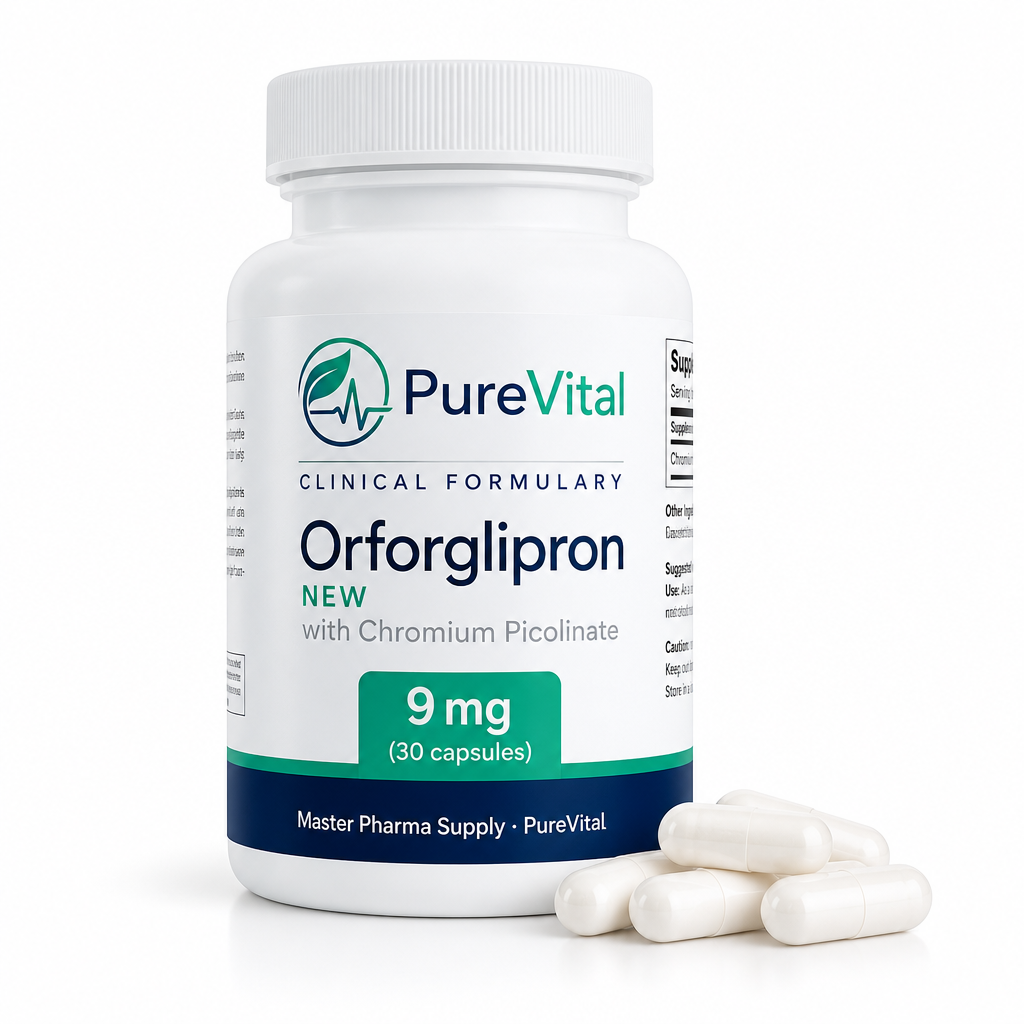
Orforglipron (NEW) with Chromium Picolinate 1mg
9 mg (30 capsules) · Capsules · API 270 mg
9 mg (30 capsules)
$179.99
View SKU →
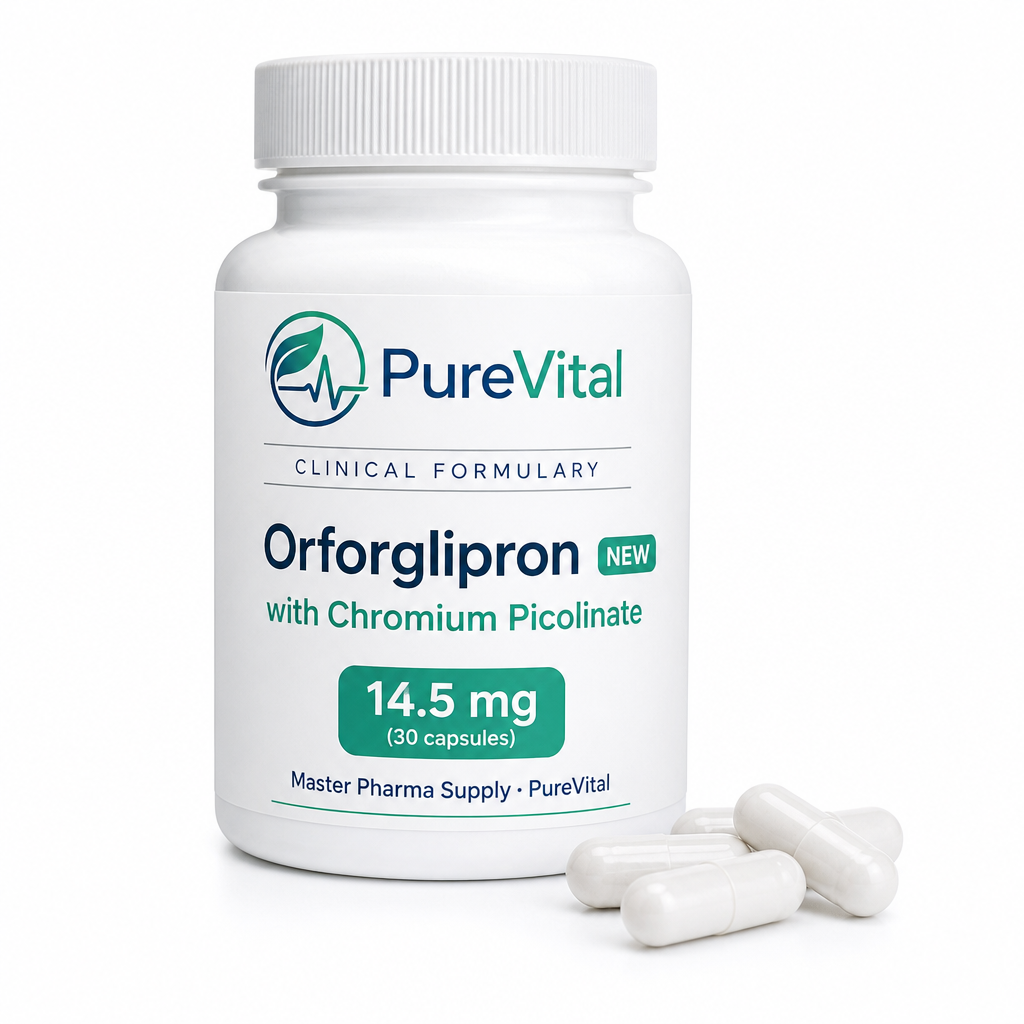
Orforglipron (NEW) with Chromium Picolinate 1mg
14.5 mg (30 capsules) · Capsules · API 435 mg
14.5 mg (30 capsules)
$191.99
View SKU →
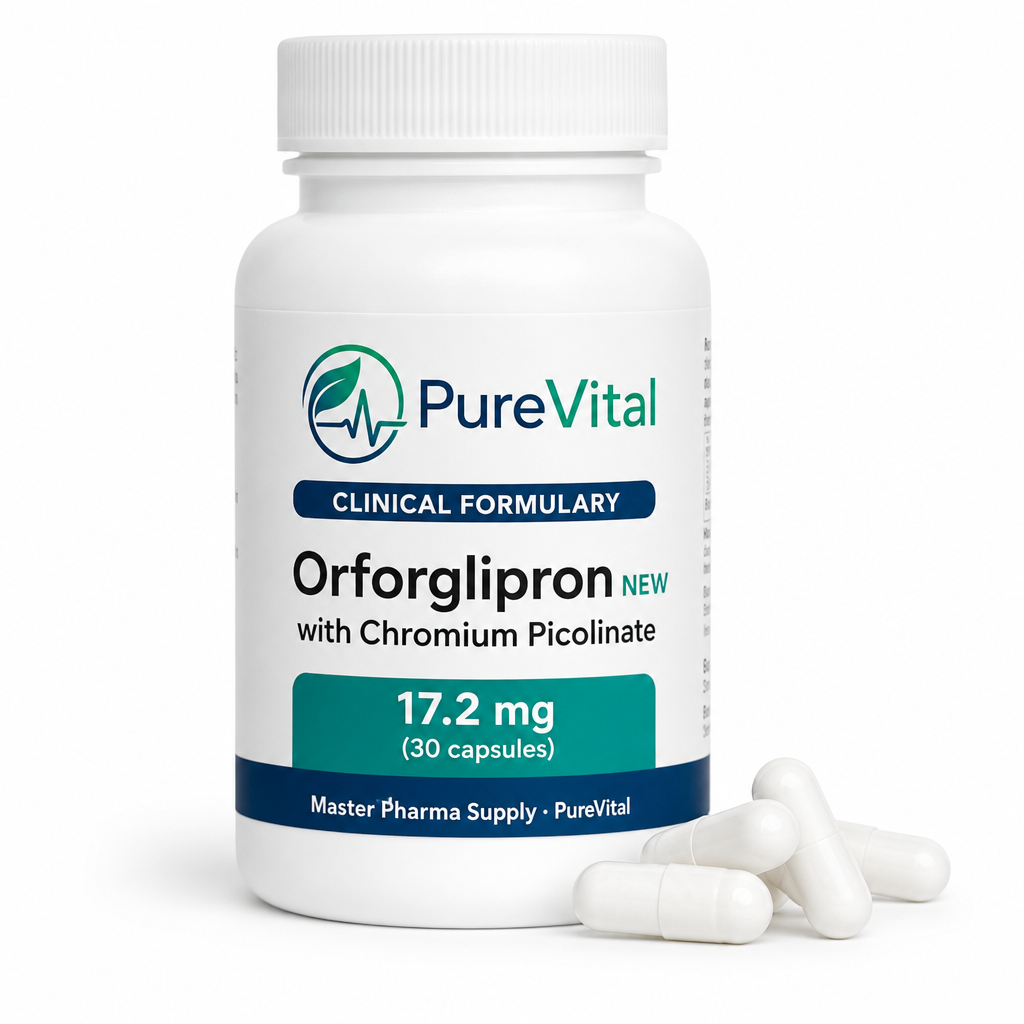
Orforglipron (NEW) with Chromium Picolinate 1mg
17.2 mg (30 capsules) · Capsules · API 516 mg
Top listed strength — 17.2 mg (30 capsules)
$203.99
View SKU →
Supportive medicines that strengthen a weight program
GLP therapy is often one pillar of a broader plan. Clinics may add lipotropic injectables, high-dose Vitamin D when deficient, or body-composition peptides such as AOD-9604 — always under protocol and patient-specific judgment.
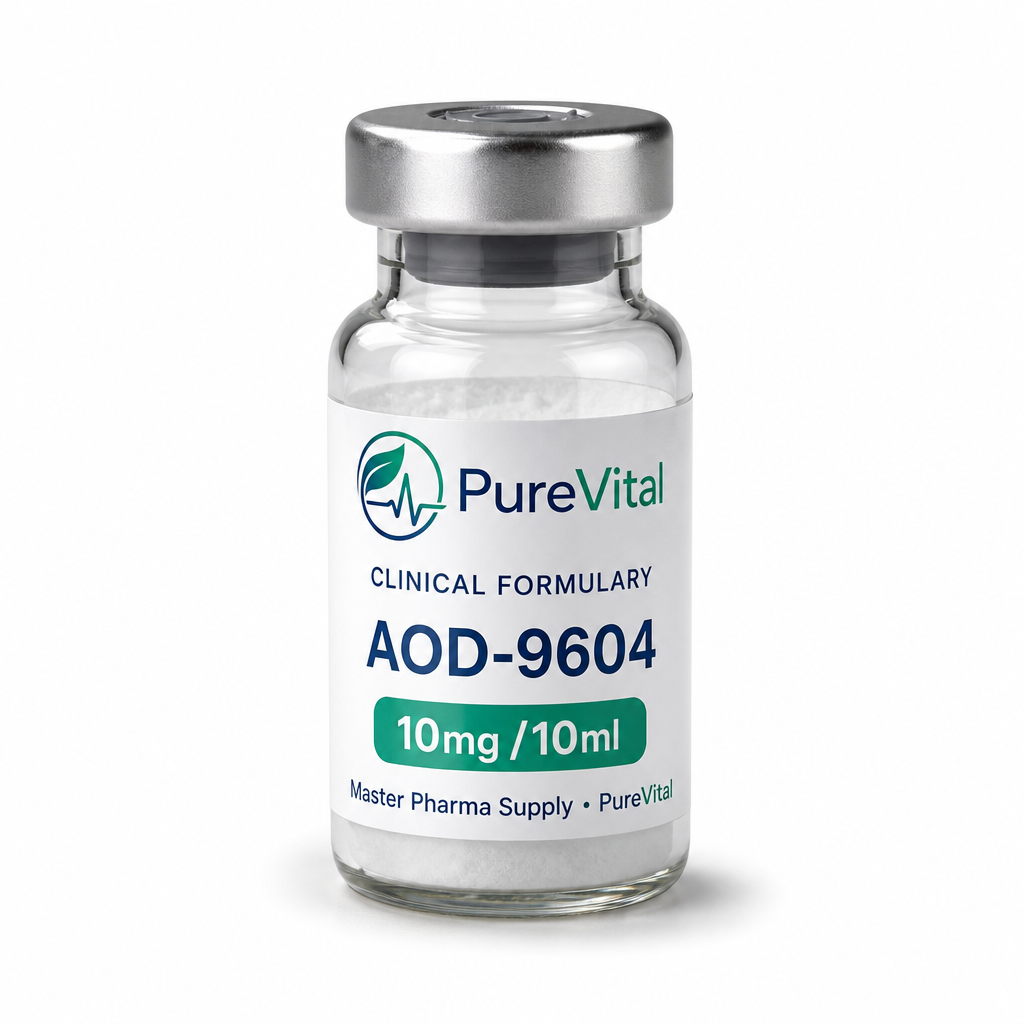
AOD-9604
10mg /10ml · Vial · API 10 mg
Peptide often discussed alongside body-composition protocols
$74.99
View SKU →
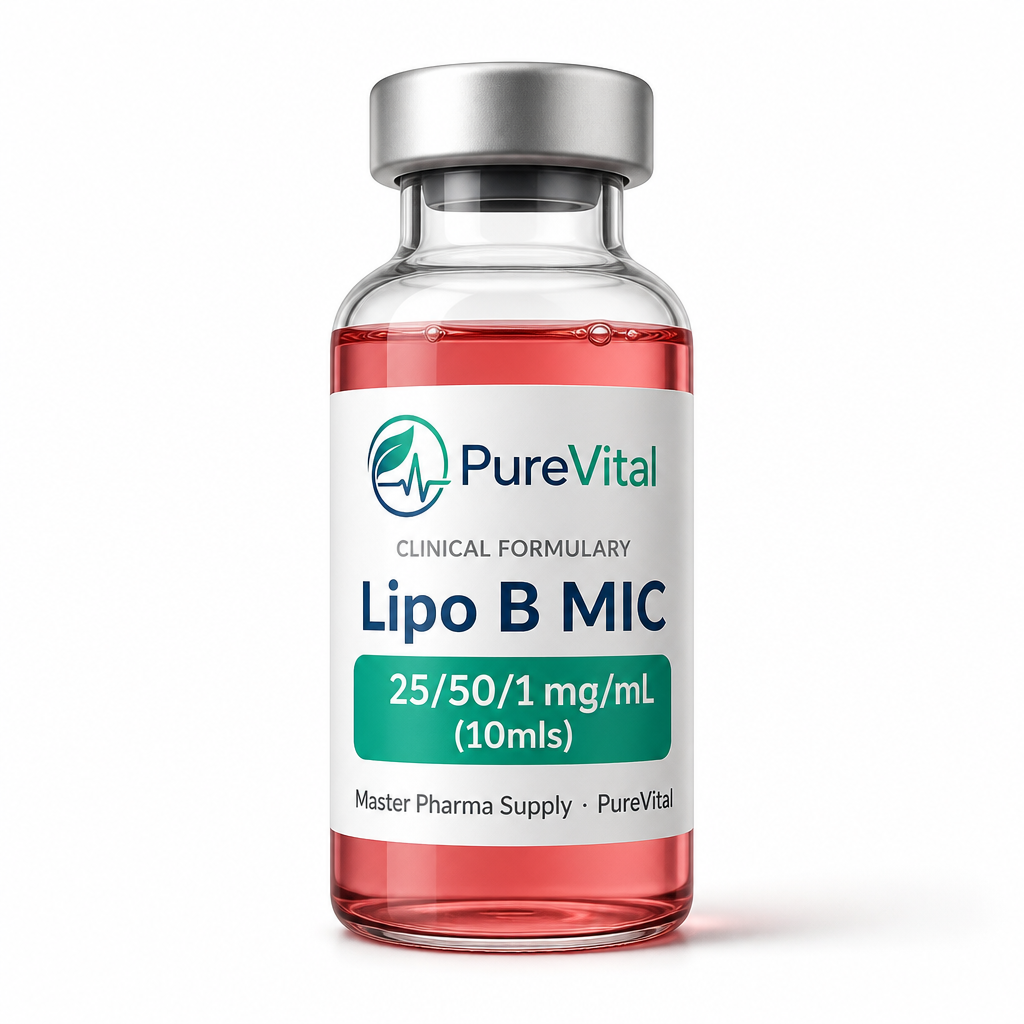
Lipo B (MIC) methionine, choline, and cyanocobalamin (B₁₂)
25 / 50 / 1 mg/mL (10mls) · Inj
Lipotropic B-complex support (MIC + B12) for energy / metabolic clinic visits
$215.99
View SKU →
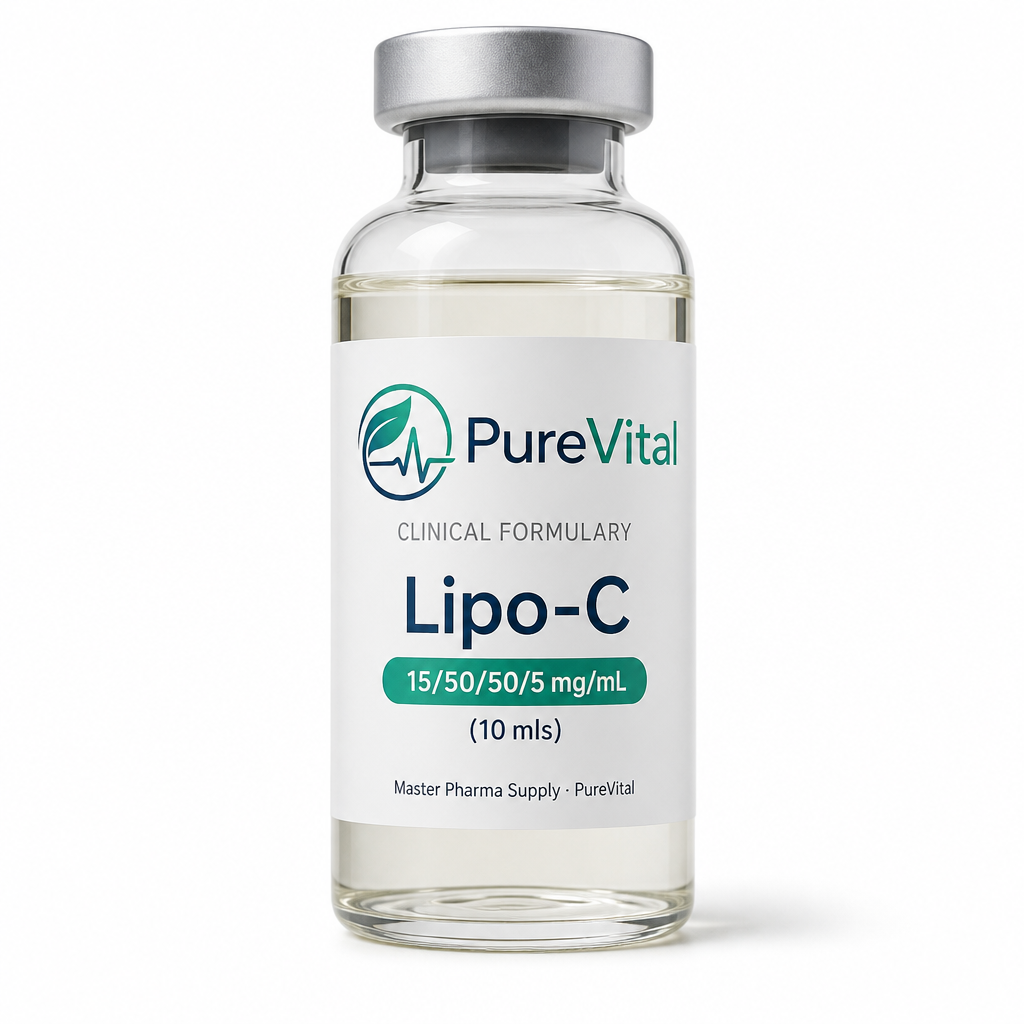
Lipo-C(methionine, choline , L-carnitine, dexpanthenol)
15 / 50 / 50 / 5 mg/mL (10 mls) · Inj
Lipo-C blend with L-carnitine for complementary infusion or injection schedules
$143.99
View SKU →
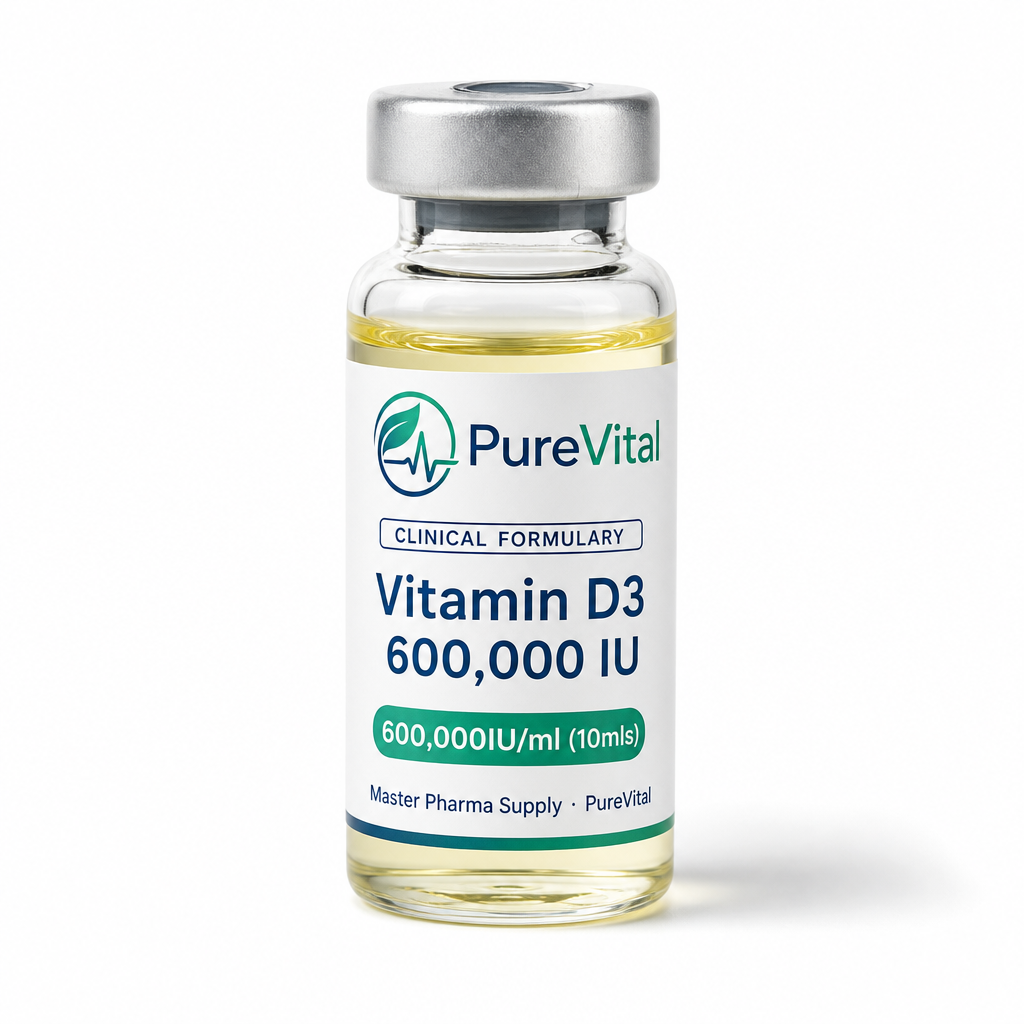
Vitamin D3 600,000 IU Inj
600,000IU /ml (10mls) · Inj · API 6 Millions IU
High-dose Vitamin D3 injectable for deficiency protocols under clinical rules
$143.99
View SKU →
A practical clinic pathway
- Screen eligibility, comorbid conditions, medications, and goals.
- Choose molecule + form (injectable GLP-1, dual agonist, oral Orforglipron, or drops).
- Align strength to titration plan and Total API requirements.
- Set nutrition, activity, and follow-up cadence before day one.
- Reassess weight trend, tolerance, labs, and adherence every visit.
Ready to stock or compare pricing? Browse the full weight-management categories or contact PureVital for wholesale and bulk questions.