
Retatrutide: Positioning an Advanced Multi-Agonist Option in Clinic Inventories
What clinics should know about PureVital Retatrutide vial and pen presentations, patient selection, and responsible rollout.
7 min read · Updated 2026-04-12 · PureVital Learn
Retatrutide attracts strong clinical interest because of multi-agonist research pathways involving GLP-1, GIP, and glucagon-related signaling. For clinics, the operational question is clearer: when is it appropriate to stock, who might be considered, and what compliance guardrails are required?
PureVital Retatrutide stock
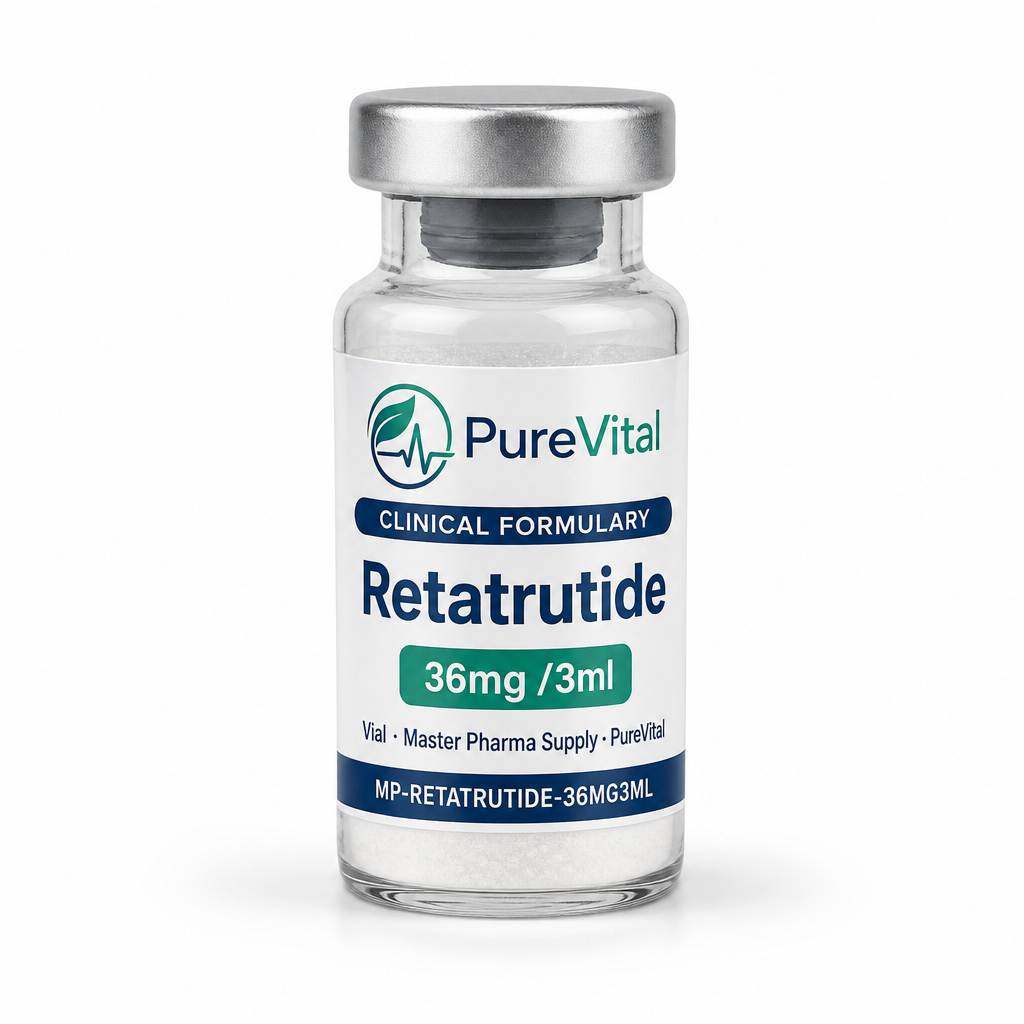
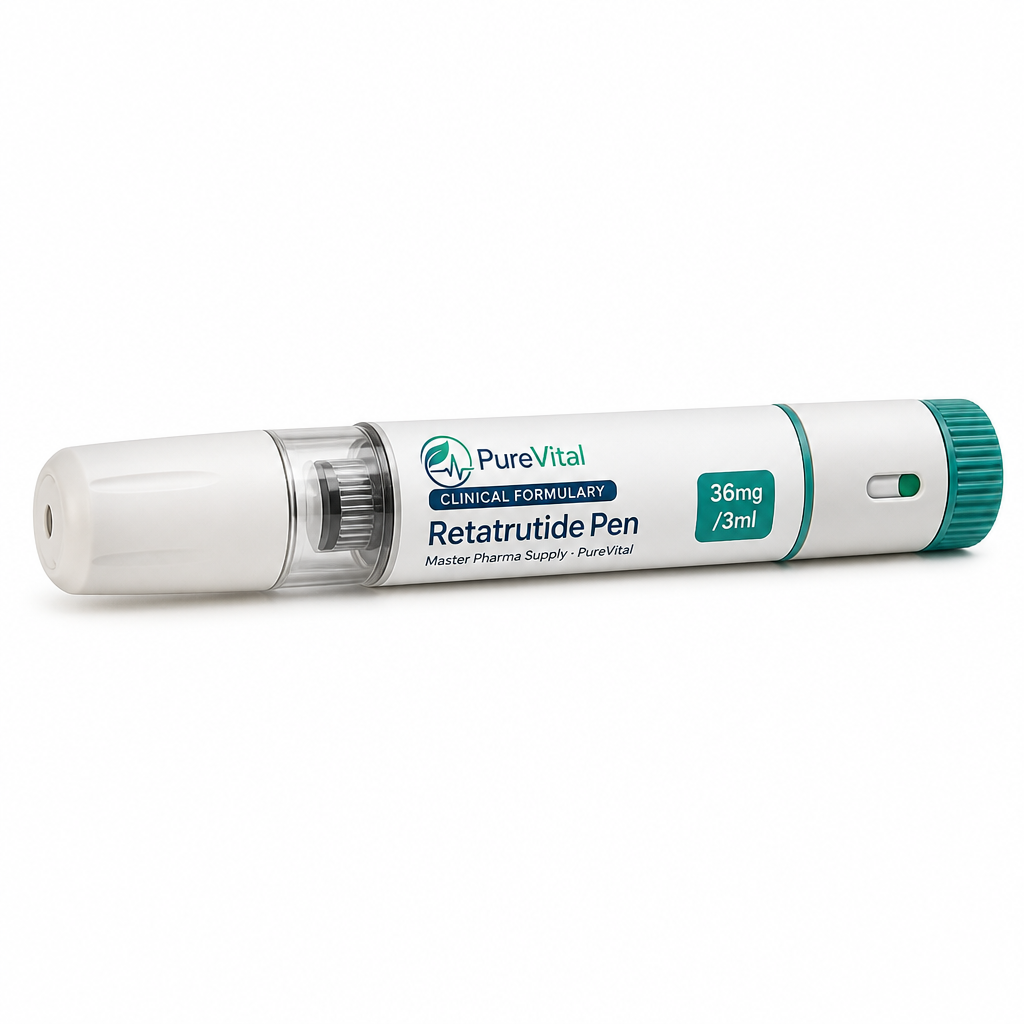
PureVital lists Retatrutide 36 mg / 3 ml vial (Total API 108 mg) and a matching pen. Keeping vial and pen strengths aligned simplifies formulary training and reduces dosing confusion.
Responsible clinic use
- Confirm legal and regulatory standing for your jurisdiction before marketing or dispensing
- Use informed consent language that matches scientific status and local rules
- Reserve for specialty metabolic or obesity pathways with denser monitoring
- Document titration, adverse events, and outcome metrics carefully
Where Retatrutide fits relative to Semaglutide and Tirzepatide
Many practices still begin with Semaglutide or Tirzepatide because of broader familiarity. Retatrutide may enter conversation for patients who need an advanced option after clinician review — not as a first-line default for every weight referral.
PureVital Retatrutide SKUs