
Licensed clinic & professional formulary
PureVital logo
Formulary / Clinical Peptides / BPC-157 (Body Protection Compound) caps
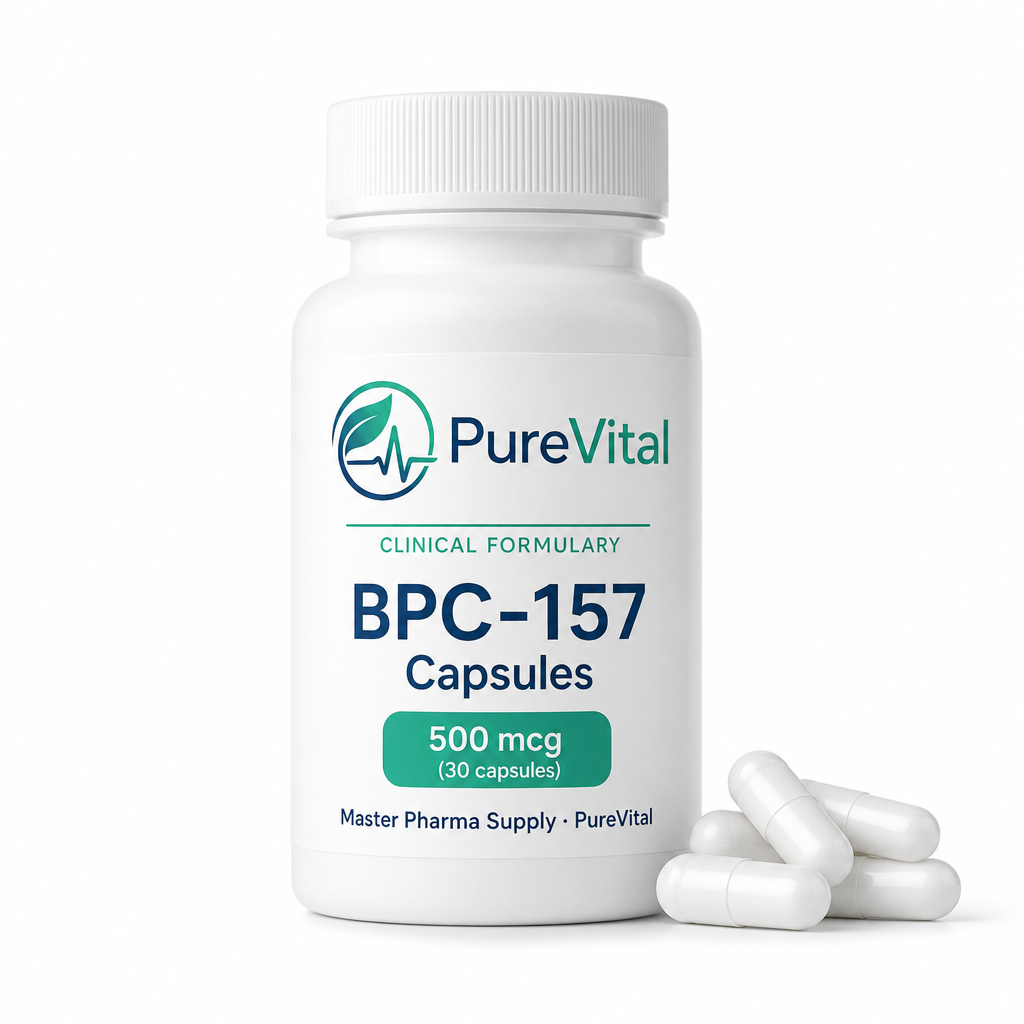
BPC-157  (Body Protection Compound) caps — PureVital
PureVital
CapsulesFeaturedIn stock

Strength

500 mcg (30 capsules)

Total API

15 mg

Form

Capsules

Brand

PureVital

Clinical Peptides

BPC-157 (Body Protection Compound) caps

Body Protection Compound-157 for regenerative clinic protocols

PV-BPC-157-BODY-PROTECTION-COMP-500MCG30CAPSULES

Professional price

$74.99

View monograph

BPC-157 (Body Protection Compound-157) is a synthetic 15–amino-acid peptide derived from a protective protein found in human gastric juice. It is widely discussed for cytoprotective, angiogenic, and soft-tissue recovery research — and appears in PureVital injectable and capsule presentations for licensed clinic formulary use. Presentation: 500 mcg (30 capsules) (Capsules); total API 15 mg. For licensed clinics and practitioners.

  • Body Protection Compound-157 for regenerative clinic protocols
  • Strength: 500 mcg (30 capsules)
  • Total API: 15 mg
  • Capsules presentation for licensed clinic programs
Licensed clinic formulary
Label-first SKU detail
Wholesale & bulk desk

PureVital Clinical Formulary — Strength & Volume updates April 2026

Mechanism themes

Receptor and pathway context written for clinic teams.

Clinic-use references

Titration and presentation notes — not patient prescriptions.

Safety & regulatory

Precautions, interactions, and status framing in one monograph.

Clinical monograph

Professional product details

Body Protection Compound-157 for regenerative clinic protocols. Structured for licensed clinics — mechanism, clinic-use themes, safety, and package clarity in one place.

Compound family

bpc 157

Overview

BPC-157 (Body Protection Compound-157) is a synthetic 15–amino-acid peptide derived from a protective protein found in human gastric juice. It is widely discussed for cytoprotective, angiogenic, and soft-tissue recovery research — and appears in PureVital injectable and capsule presentations for licensed clinic formulary use.

Label-first clinic supply presentation
Contents of the package

What arrives for this PureVital SKU

  • 1 × 500 mcg (30 capsules) capsules presentation
  • Active listing: BPC-157 (Body Protection Compound) caps
  • Total API (label): 15 mg
  • SKU PV-BPC-157-BODY-PROTECTION-COMP-500MCG30CAPSULES
  • Oral capsule bottle — store per label away from moisture
  • PureVital professional clinical formulary supply

About BPC-157

Preclinical and translational literature has explored BPC-157 across tendon, ligament, muscle, gastrointestinal mucosa, and wound-healing models. Clinics value clear presentation labeling (mg/mL or mcg/capsule) so protocols stay reproducible.

  • Studied for tendon, ligament, and muscle recovery biology
  • Explored for GI mucosal protection in experimental models
  • Discussed for angiogenesis and localized tissue repair support

Mechanism of action

LigandReceptorcascadeCliniceffect
  • Angiogenesis pathways (including VEGF-related signaling discussed in literature)
  • Nitric oxide / eNOS modulation linked to vascular tone and healing milieu
  • Anti-inflammatory cytokine modulation (e.g., TNF-α, IL-6 signals in models)
  • Support for fibroblast activity, collagen organization, and tendon cell behavior
  • Neuroprotective signaling explored in CNS injury models

Clinic reference dosing themes

01

Start low

02

Assess GI

03

Escalate

04

Maintain

Injectable programs often use gradual subcutaneous titration. Literature-style reference ranges discussed by research clinics include starting near 250 mcg daily and stepping toward higher daily amounts as tolerated — always recalculated to your vial’s mg/mL concentration. Capsule programs use fixed mcg strengths (e.g., 500 mcg) on schedules set by the prescribing clinician.

  • Prefer subcutaneous administration for injectable SKUs unless your protocol states otherwise
  • Rotate injection sites; avoid intravascular administration
  • Align daily volume to labeled concentration (example: 5 mg/mL implies 0.05 mL ≈ 250 mcg)
  • Cycle length and 5- vs 7-day schedules are clinician-defined

Clinic note: Reference themes only — not a patient-facing prescription.

Documented & proposed benefits (literature)

  • Accelerated soft-tissue healing signals in tendon/ligament/muscle models
  • GI mucosa protection themes in gastritis / barrier models
  • Enhanced microcirculation discussion in damaged tissue models
  • Neuroprotective findings in select trauma models
  • Reduction of inflammatory markers in experimental settings

Adverse reactions & side effects

Available reports generally describe a favorable tolerability profile with mostly mild, uncommon effects.

  • Injection-site irritation or redness
  • Mild headache or dizziness (uncommon)
  • Transient fatigue in sensitive individuals
  • No major systemic toxicity pattern widely established in available summaries

Contraindications & precautions

  • Hypersensitivity to peptide formulations or excipients
  • Injectable SKUs: subcutaneous use only — do not inject IV/IM unless protocol expressly differs
  • Use caution with active bleeding disorders or anticoagulant therapy (angiogenic biology)
  • Avoid unsupervised combinations with systemic corticosteroids

Drug interaction notes

  • No robust catalog of negative drug–drug interactions published to date
  • Theoretical synergy discussions with GH secretagogues (e.g., Ipamorelin) and gut-supportive agents
  • Still review the full medication list in clinic before combining peptides

Pregnancy, breastfeeding & pediatrics

Human data in pregnancy and lactation are insufficient; avoid use unless a specialist explicitly directs otherwise. Pediatric safety and efficacy are not established.

FDA / regulatory status

BPC-157 is not FDA-approved as a finished pharmaceutical drug for general therapeutic marketing. It is discussed as an investigational / compounding-context peptide. Clinics must follow applicable laws for possession, compounding, and dispensing.

Selected references

  • Sikiric P, et al. — BPC-157 and healing of muscle, tendon, ligament, and bone (orthopaedic research literature)
  • Brcic L, et al. — Inflammatory pathway modulation by BPC-157
  • Seiwerth S, et al. — Cytoprotective peptide perspectives on BPC-157
  • Drmic D, et al. — Wound healing and tissue repair acceleration themes
  • Reviews on peptides in regenerative medicine (2020s literature)

Educational formulary information for licensed clinics and practitioners only. PureVital presents professional supplement / wellness formulary items — not regular medicines. Final presentation choice, titration, and monitoring remain clinical decisions. Not intended to diagnose, treat, cure, or prevent any disease.

Continue browsing

Related formulary items

Same category presentations clinics often review together.

View Clinical Peptides
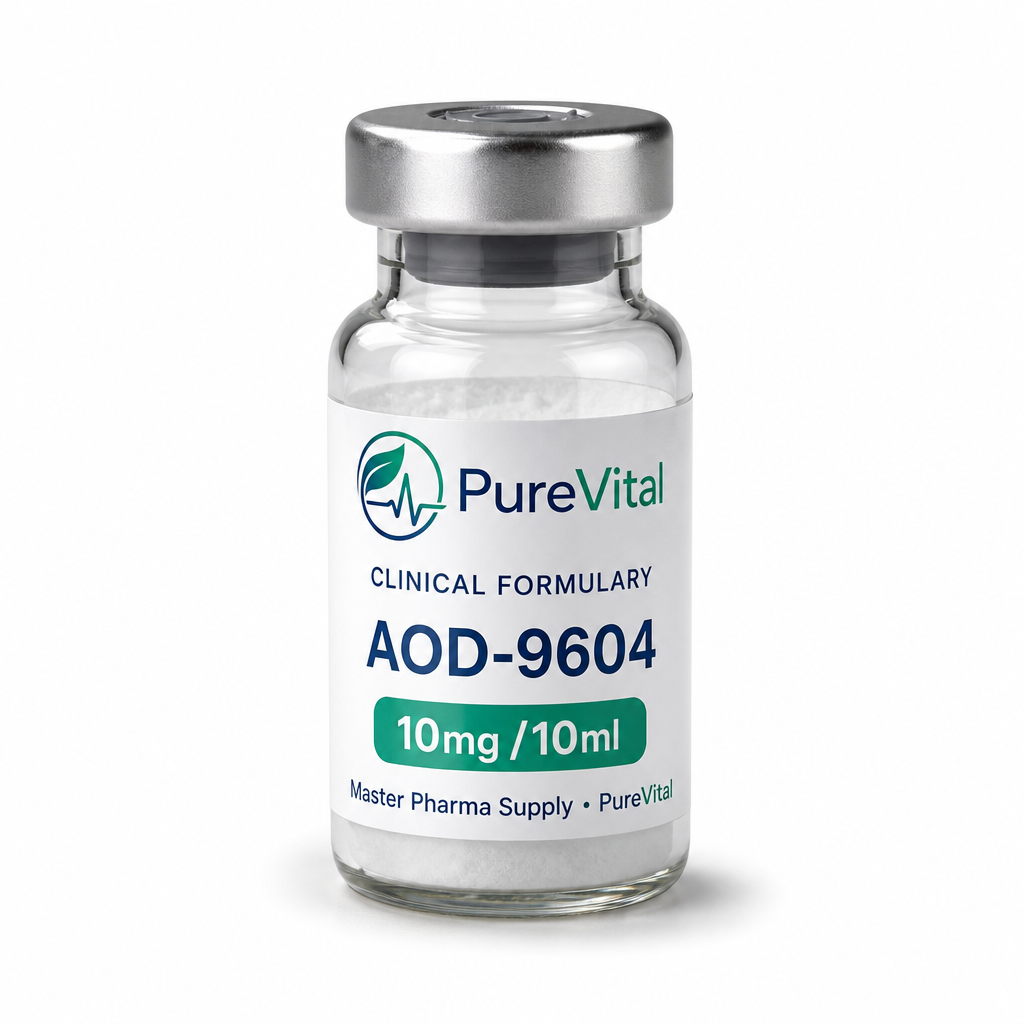
AOD-9604 — PureVital
Vial

Clinical Peptides

AOD-9604

10mg /10ml

PV-AOD-9604-10MG10ML

$74.99